Category: SHORTS

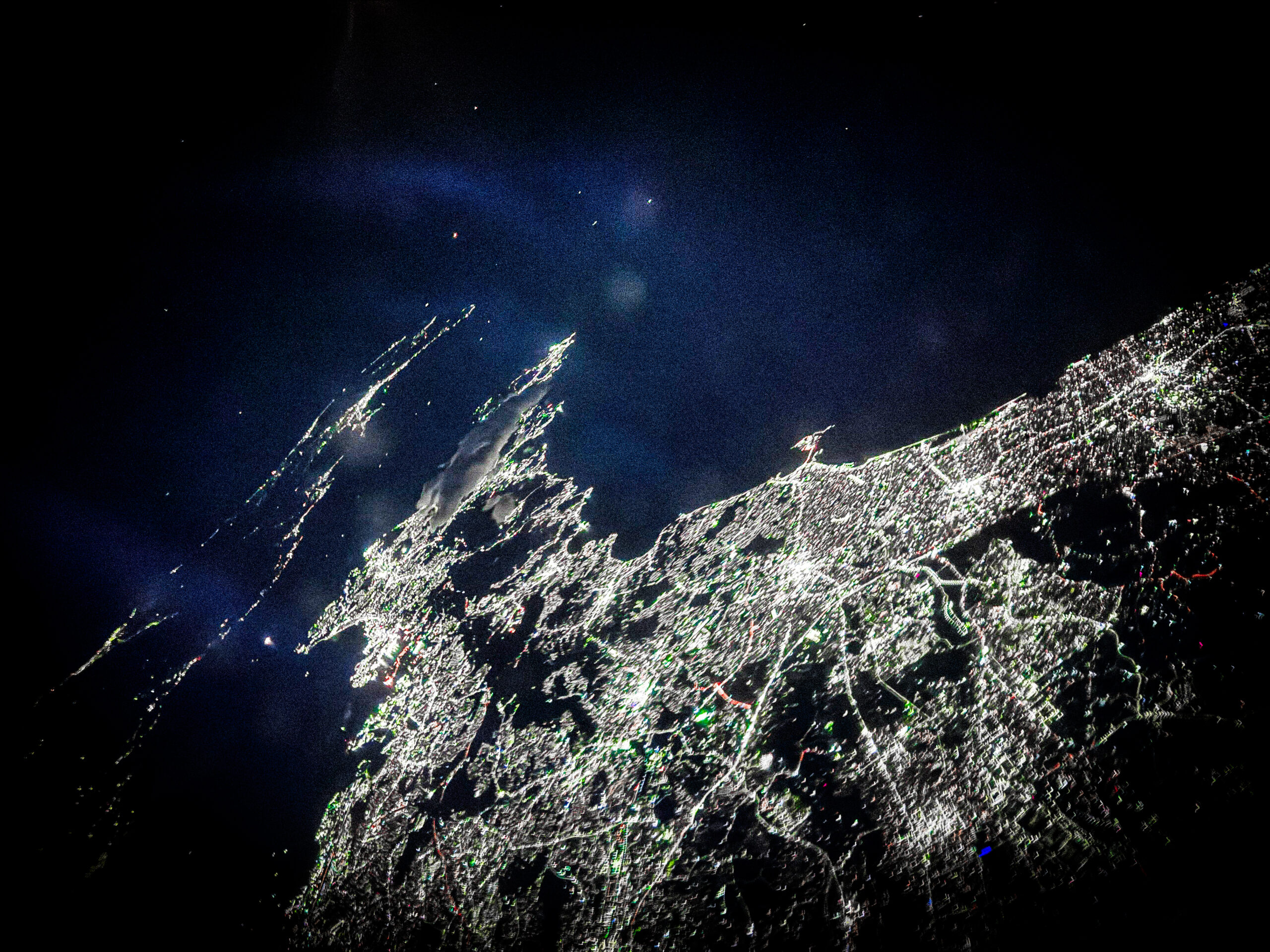
  • TAICHUNG | STATION 2 STATION

    TAICHUNG | STATION 2 STATION

    It was 2024 and Wenlen had still never met her paternal grandfather, Chen Weng-feng. 

    It was 2025 by the time Wenlen learned that Chen Weng-feng had actually died a quite remarkable death… in 2017. 

    That it took a decade for the news to arrive was hardly a surprise. Wenlen had long since stopped speaking with her parents; or, maybe, it was the other way around. Shortly after her third semester at University College of London (UCL), when news had reached them that Wenlen had changed majors from civil engineering to “FASHION?!,” the daily calls, the monthly letters, and the bi-annual tuition subsidies ceased suddenly and unceremoniously. 

    Her financial aid advisor, the oft rosy-cheeked Ms. Toffen, called her in before the winter holidays: “Are you aware that we have not received payment for the rest of the semester?” 

    Wenlen’s stomach dropped. She looked across the banged-up but freshly varnished, desk. It was hardly bigger than the century-old slabs of wood on which she took her exams in the university’s oldest classrooms. As she gazed around the perfectly square room, Wenlen mused that Ms. Toffen must have use this office for conversations and another office for all of her administrative paperwork.

    Ms. Toffen, to her credit, had a real gift for dealing with international students. Not only was she efficient in helping them navigate the labyrinthine bureaucracy of British higher education system, but she also seemed purpose-drive to facilitate these exact types of conversation. It was as if her calling was to defend the blossoming of the young adult mind in the incredibly free and limitless city of London and help student from more conservative backgrounds navigate the inevitable collision course such freedom of mind often entailed with their families.

    “No[re], I really hadn’t any idea” Wenlen responded in a smoked-glass British accent that sounded more like a young and reckless female Mic Jagger than like the perfectly manicured singing voices of Hong Kong “English Pop” that Wenlen had imitated growing up – Cantopop artist like G.E.M. 

    Ms. Toffen wrote a number on a piece of paper and slid it across the desk – “this is what you need – come back if you need anything – you are not the first to follow your heart, and as long as I am sitting in this godforsaken cube of a room 250 days a year, you will certainly not be the last. I’ve never lost this game and I’m not about to start losing now.” She let out a courteous huff to signal the meeting had concluded and that was that.

    Wenlen took on two part-time jobs (server + au pare), relocated to a shared flat on the outer rim of the city, and made it happen through sheer grit and an unhealthy obsession with the Rolling Stones early catalogue, everything up to 1981’s “Tattoo You.” In fact, she consumed so much of their music that her already transitory accent began to take on a rather surprising Black American patois – saturated by the inflections, idioms and blues rhythms that had catapulted the Stones to international fame in the first place.

    Wenlen absolutely thrived in the program and continued to expand into own body and soul. She was no longer a bonsai tree, but rather, a perineal evergreen planted in the perfect plot of soil. Her designs were radical – the kind of radical, concept driven designs that had catapulted the Japanese designer Yayoi Kusama to international acclaim in the 1960s. Her WITHOUT series – hoods without sweaters; pants without waistlines; glasses without frames – earned her a prestigious summer internship at Goyard working directly with the creative director on their Paris Fashion Week portfolio. 

    During her second to last semester, Wenlen received a letter from her uncle Chun-Yin  – her mother’s brother, twenty years junior. Her parents – both civil engineers – had disowned their Taiwanese passports, emigrated to mainland China and shipped off as part of the Chinese Belt and Road Initiative. Last Chun-Yin had heard, they were living in Kazakhstan – the “Middle Corridor” – where her father Lin was applying his subject matter expertise in cost-efficient asphalt manufacturing and her mother Nakita, was running training seminars on rainwater runoff design. “Well at least they have each other,” Wenlen remembered thinking at the time. The letter had concluded with “I don’t know what to say other than… don’t forget, you still have family here in Taichung. Your grandfather Chen Weng-fend still loves you.” 

    Ten years passed in the blink of an eye. One day she woke up and it was already 2025. Had Wenlen ever responded to Chun-Yin’s letter? Honestly, she couldn’t remember. Shame can be a power amnesiac and the more time that had passed, the less likely it was to ever receive a response. That’s not to say it didn’t weigh heavy on her – responding to the letter was without a doubt, the top item on her “shit list” up there with immigration paperwork, taxes, her called off engagement. Especially the last words – “Your grandfather Chen Weng-feng still loves you.” What bothered her so much about this line? Well for one it was the sentences placement at the end of the stanza – perfectly positioned as the last thing said and thus the first thing that any subsequent response she would write would need to address. But more than that it was the word still (look up in Taiwanese). What could that even mean, still – she had never even met the man.

    Ten years passed. She no longer listened to the Rolling Stones at all – or music for that matter. She listened almost exclusive to BBC World News, its news anchors kept her company. After a decade plus of insane hours working for various trust-fund design boutiques that all seemed to end rather unceremoniously whenever the founder got married, got bored, got pregnant, got acquired or retired, Wenlen found herself managing a team of four buyers at one of the world’s leading textile importers.

    Ten years passed and try as she might, she could not shake the feeling that she had fallen asleep on the tube and woken up several stops too late. So she got off the train, took the stairs under the track and walked over to the other side of the tracks. She boarded the same train, but the opposite direction. “Please mind the gap.” A few days before she left London, she stopped by her alma matter. For whatever reason, she could not imagine heading back to Taiwan without first seeing Ms. Toffen but as she walked through the campus to the cubicle where the two had repotted Wenlen all those years ago, she found in its place a new building of modern, androgynous and emotionless design. She walked in and asked the receptionist if Ms. Toffee was still there but the receptionist or the various other staff at the Financial Aid department had no recollection of the woman. 

    Wenlen left for Taiwan two days later.

    The flight from London was long. It felt like ten years. It took two days from tarmac to tarmac. Wenlen landed at 5am at Taipei Taoyuan International Airport – she hadn’t been here since she had left. The same station on an opposite track. Working her way backwards. She had packed light. She, more than anyone, knew that Asia was of a source of rather than destination for clothing. 

    “How long will you be staying in Taiwan?” the immigration man asked her in perfect English. She didn’t know. 

    “A week,” she hoped.

    “What is the purpose of your trip?” he asked, this time in a more officious tone. Again, she didn’t know.

    “Vacation.” They let her in.

    She had a few hours to kill until check-in and worked her way down to the airport food court, to 之軒優植學院 (the Academy of Purify Life Bakery) as if on autopilot. It was always the first restaurant to open at Arrivals. She grabbed the tongs from exactly where she had left them all those years ago and grabbed her favorites: 全植丹麥熱狗排 (Veggie Danish Hot Dog Bun) and 蒜蒜包 (Cream Cheese Garlic Bread), along with a pot of Oolong Tea, and of course, with no parents there to tell her no, a slice of Chia Te Pineapple Cake.

    She sat at the third cafeteria table from the cashier, the one that she had eaten so many snacks with her parents over the years, only this time, alone. But at least the food had never tasted better, the dough so eggy, savory, and perfectly crisp – the filings as if cooked in a new type of butter or olive oil that she had all but forgotten. She reached into her backpack and pulled out her iPad, as well as a paper bag enclosing the letter her uncle had sent all those years ago. She connected to the WiFi as various janitors and servers pushed carts stacked with clean dishes past her, with smiles and a sense of purpose. “Routine is a hell of a drug,” Wenlen thought to herself, “and breaking routine is a hell of a comedown.”

    She looked up the address, the blue-inked Latin letters faded and smudged after years of waiting. With a bit of online sleuthing, she was fairly confident that she had located her uncle’s address on Google Maps. As her tea opened up, she dug deep into her memories and corroborated the location as it related to the few remaining landmarks from her childhood – statues, parks and bridges hidden amongst a new maze of boba tea and minimalist coffee shops. With Taiwan’s incredibly static real estate market, provided her uncle was still on this earth, she knew if she followed the Google Maps directions, it would likely lead her from her present directly to her past. But what about her future? “Is my past my future?” she wondered but decided to retreat from the line of questioning and into the pineapple cake. She used the toilet – taken aback the pre-heated seat and incredibly high level of sanitation – pulled out some TWD from the ATM and made her way onto the local (commuter) train to Taipei’s Main Station.

    As the train winded its way through the overcast morning, through Taoyaun and New Taipei City,  Wenlen felt a tinge of embarrassment at her first culture shock: of the twenty people in her subway car, sixteen had hopped on the early morning train only to fall immediately back to sleep. The green  glow that adorned either side of the train tracks reminded her of her many rail trips around the U.K. But unlike the flat and tamed horizontals of Britain, this chaotic medley of palms, evergreens and bamboos clearly favored the vertical. 

    “Taipei Main Station” the announcement rang out and like a magician snapping their fingers, the train cabin woke up reluctantly and emptied the car. “Routine is a hell of drug,” she was hungry again.

    The rest of her day was entirely uneventful. She spent it in a spacious four-star hotel room that fell within her budget only because it was a Tuesday during the rare part of the year with no holidays on the horizon. She ordered room service, took two cat naps, two hot showers, and spent the in-between parsing local TV channels, news stations playing CCTV of minor car crashes, hooligans getting perp walked after putting unknown substances in food vats at night markets, that type of thing – criminal acts that would never make the news in London. She installed an e-sim and deleted half the apps on her phone. She knew her iPhone contained more baggage than the 8kg suitcase she had packed. She had forgotten to unpack her phone but it gave her something to do while she waited for the sun to rise. At eight a.m., she checked out of the hotel and went straight back to Taipei Main Station. As if a local, she fell asleep on the train and woke up a stop before Taichung. While she had intended to use the 45 minute train to prepare for whatever emotional journey laid ahead, her unexpected snooze gave her just enough time to read the letter one more time: “Your grandfather Chen Weng-fend still loves you.” 

    “Next Stop: Taichung Rail Station.” Wenlen found herself rapidly decelerating on an entirely unfamiliar elevated track, threaded through what look like a giant metallic crest that reminded her  of some of the more delicate – if not pretentious – soup garnishes one was likely to find at Michelin-starred Chinese restaurants in London – like deconstructed, ethically sourced “birds nest soup” – a Qing Dynasty speciality – or reconstructed – not-so ethically sourced “shark fin soup” – one of the Four Sea Treasures (鲍参翅肚) of traditional Chinese food. She was hungry again.

    “Is this Taichung? I remember it looking… different,” she asked a college-aged girl in Chinese. The girl was traveling with a crossbody bag adorned with character plushies that seemed to date back to Wenlen’s own youth: the cat from Doraemon, the male ballerinas from Crayon Shin Chan, and of course,a pink Pikachu wearing librarian glasses. Wenlen almost giggled but realized the girls accessories were no more out of place than the Rolling Stones keychain she had on her keys in London. Wenlen conceded, perhaps classic cartoons were the classic rock of Asia?

    “Is this your first time at the new station?” the girl replied in perfect English. “Don’t worry the old one is still here – and the one before it too.” Wenlen must have looked confused because the girl followed up with “You can follow me.” And when the doors opened, Wenlen followed the girl to the exit gates, down an escalator and back to the outdoor plaza where the historic, traditional Japanese-built train station remained, unchanged, almost identical to how she remembered it. The girl motioned over to it – “what did I tell you, it’s still here” – and rolled her eyes – to which Wenlen responded – “when did they stop using it?” 

    “When I was about 11 years old, so…” Wenlen looked at the plushies again – “must’ve been 2017.” Wenlen thanked the girl, but not before feeling her stomach collapse in on itself like an abandoned sulphur mine in a once-in-a-century typhoon. She knew instinctively, there was no way her grandfather – or anyone older than 80 years old – worked at the new train station. It was far too modern and efficient. For the first time, she sensed her grandfather was dead. 

    Wenlen ran a hundred steps to catch up with the student. “I’m Wenlen, Wenlen Weng-fend.” The girl gave her a funny look, followed by a big smile. 

    “Hi Wenlen, I’m Tiffany Yonghe. Where are you from?”  

    “I live in London…” Tiffany looked starstruck, “but I grew up in Kaohsiung.”

    “LONDON! How cool” she tried to regain her composure but it was futile. “What a dream. I’m obsessed with the culture – Downton Abbey! – Mick Jagger – well, everything but the food,” she pulled out a plastic bag with two red bean curd puff pastries and Wenlen gladly accepted. It was incredible.

    “I made these ones myself – this specific recipe is one I’ve been baking since eight grade.” 

    Wenlen looked at the half eaten pastry and then back at Tiffany.

    “The secret ingredient is paprika. So what brings you to here from London? I hear the train stations there are quite the site to behold. King’s Cross. Oh yeah and Platform 8 3/4.”

    Wenlen laughed again. Something about this girl just exuded cool, the rarest form of confidence. “Well actually, I haven’t been back since I was 18.” She looked at Tiffany with a smirk that revealed she knew Tiffany – like so many of the people in her life – had still not been able to carbon date her. “I’m 35 now. I guess you could say…” Wenlen hadn’t rationalized, articulated, or vocalized any of the words that were about to come out of her mouth – in fact, she barely had a response for the customs agent with her meek “vacation” – “I guess you could say…”

    Sensing she had put Wenlen on the spot, Tiffany cut her off. “Wow… seventeen years, that’s heavy… whipping cream.”

    “Yea… I guess you could say… I feel heavy.”

    “Sorry I do this thing where I turn adjectives into… baking. And your family still lives here?”

    “We’re about to find out.”

    Tiffany asked Wenlen where she was staying – “don’t worry, that’s a nice hotel” – and gave her some more pastries from her bag – her wax apple scones, the latest addition to her “menu.”

    “Do you always carry so many pastries with you?” 

    “Yes, always” – Tiffany pointed at her rather slender figure. “As you can tell, I don’t eat them all myself – that’s the curse of the baker, I suppose – it takes us weeks to get it just the recipes right but we can’t even enjoy the fruits of our labor. So I bring these to university and hand them out. Who knows, maybe one of my MBA colleagues at NCHU will like it so much they invest in the bakery I plan on opening.” The two exchanged WhatsApp numbers and then split ways. 

    Other than the customs agent, this had been Wenlen’s first actual conversation in days, perhaps even a week. She had used an automated kiosk for her flight, an automated kiosk for the train station, an automated kiosk for her hotel reservations. In the week(s) before her departure from London, had she even had a single call? No, now that she thought back on it – she had conducted work almost entirely via email and messaging apps. How had she left things in London?  

    The conversation with Tiffany was like a breath of fresh air – like a sprinkle of paprika she didn’t know she needed – she  reminded Wenlen of herself when she was that age: fiercely independent, obsessed with her craft, willing to tackle the biggest and smallest challenges life would throw her way. But the two were nothing alike. Wenlen was either running from something or racing towards something. And now she was… heavy whipping cream?

    Wenlen skipped the automated kiosk and went straight to the concierge. She showed her British passport and paid with her British credit card. The concierge was an older gentleman with a silver, flat-top style haircut that looked as if it had been recently shorn – as recently as that morning. His hair had that sort of “wet” gel texture that seemed impossible to recreate outside of a barbershop. Sure, you could buy the same product the barber put on your freshly cut hair – you might even have a swinging mirror that allows you to see both sides of your head, but try as you will, you can never get the look of fresh cut “wet” gel hair. Of this Wenlen was sure. She had, after all, overseen more Paris  London Milan Fashion Week shows that she could count on two hands. And while male hair was in no way her specialty, the “wet” gel look absolutely dominated the runway. The concierge had spent time in the U.K. – in Leeds – working as a busboy and then as a logistics officer. He hated the Stones but loved the Beatles. “Room 1107, we have you here for five nights. My name is Chai – feel free to call down or come see me if we can do anything to make your stay better.”

    From her corner room, she could see the whole city laid out before her. Or at least half of it. A few blocks away, the soup garnish train station and the two other train stations that preceded it. The plaza where she had met Tiffany. Through the gaps in other hotels and high rises, she could also see her next destination – the street for where her uncle had sent the postcard. She took a shower only to discover that hotels no longer provided soap, shampoo or conditioner as a result of a recent law.   With a towel wrapped around her rinsed, not cleaned hair, she looked at her face in the mirror: “Heavy heavy whipping cream.”

    The walk to her uncle’s condo was no more than 10 blocks, but the sporadic rain required her to purchase an umbrella. Having had two days to observe Taiwan’s umbrella culture – she opted for the most popular solution – a small, transparent umbrella she could rest on her shoulders while looking ahead. Wenlen walked up to the building. The first floor sold light sandwiches – the type with the crust cut off – had two sets of washer dryers and also sold a small collection of manga comics and playing cards. She went up to the clerk, non-automated, and asked in Chinese – “hello, how do I get to the condo, an old friend is expecting me.” A stout lady in pajamas reading manga, eating a sandwich and washing her laundry glared at her, as if to imply that showing up unannounced was still taboo regardless of how old the friend was – maybe Wenlen should have asked in English – but the clerk directed her to the residential entrance without hesitation and next thing she know, Wenlen was standing face-to-face with the door to her past, present and future. The door was industrial white  – the type of color that was not paint, but rather seemed as if it an inherent physical characteristic of the material from which it was made. It was stained yellow, beige and tan and the chintzy faux-gold hardware was chipped and flaking, revealing the nondescript rusted black metal that made it up. She knocked three times. Once for her past, once for her present and once for her future. She heard a voice and before she knew it, she was wrapped in the arms of a man she had not seen since she was 18 and could not tell where her tears ended and where his began in the family stream that was love, hurt and regret. 

    He welcomed her into his condo and prepared an oolong tea he “had been saving for this exact occasion” – “but uncle, doesn’t tea expire?” – “not this one Wenlen” – and Wnelen busted out the wax apple scones and despite the millions of things they wanted to say to each other – and the thousands of more immediate questions like “what are you doing here?,” “are you okay?,” “how long are you staying?,” “does your family know you are here?” – instead, of everything that needed to be said, Chun-Yin sat quietly in front of a trail of breadcrumbs, in seemingly deep thought that resolved with the question – “Wenlen – I use know, where did you get these scones?” and Wenlen thought that maybe heavy whipping cream was not so heavy after all.

    Her uncle had aged considerably since their last encounter. For one, he was now bald. For two, he was now fat. And for three, he was now divorced “but seeing someone.” And for four, “I still talk to your aunt every week.” And for five, “I think you would love Jun – he is a copywriter – we’ve been together for three years – he wants to get married now, now that we can, but I prefer to do my own taxes.” Wenlen looked around the room and sure enough, saw artifacts of cohabitation – textbooks on advertising and magazine subscriptions to young professional organizations that her uncle clearly had no interest in, a staggering amount of reading glasses and assorted glasses cases and glasses spray, shoes and jackets that seemed comically small  given her uncles new heavyset stature. 

    “Uncle – I am so happy for you,” the tears were as steady and as the rain out side – “I have never loved you more and could not be more proud of you.”

    “Thank you Wenlen – things are great here – if you stick around long enough, I know your aunt would love to see you too. Losing you was my only real regret in this life. Not that regret is the right word – but not hearing from you for all of those years – not knowing  if we’d ever get this change to coexist as the adults we want to be in life – was something I carried around every day like a charm on a bracelet that I never take off. Of course, I knew you were alive still. Thank you for not changing your name and thank you Mr. Google.” He laughed a deep laugh and Wenlen felt a wave of shame that she had never thought of returning the favor – of Googling her family to ensure the binary of their existence was in the affirmative. 

    “Well, we have lots to talk about no doubt. Thousands of words. I’m sure you would like to know what’s up with your family. But first, you never answered me: where in the world did you get those scones? You know” he lifted his belly, “I didn’t get this way by not trying every bakery in Taichung. These must be from Taipei.”

    “Actually uncle, these are from a friend here in Taichung,” Chun-Yin gave her a curious look as if to say – “so you saw your friends before your family?” – causing Wenlen to add, “a new friend – we met on the train this morning.”

    “Truly exceptional. What is that… wax apple? How about we go out to lunch and I can catch you up? You also never told me, how long are you sticking around Taichung?”

    “Who says I’m leaving?” the words slipped out before Wenlen could stop them and they both laughed, put their shoes back on by the doorway, grabbed matching clear umbrellas, worked their way down to the manga sandwich laundromat at which point the stern pajama lady, still waiting for her clothes to dry, in a complete about-face asked “Chun-Yin, who is this wonderful young lady?” – “This is my niece Wenlen – she is visiting home from London for the first time in many years” – and the pajama lady stood up and bowed and heaped enormous praise on Wenlen, her hair, her shoes and her not-so-freshly laundered clothes, taking strange pride in the fact that Chun-Yin’s niece had decided to travel two days tarmac-to-tarmac, take the train from Taipei and visit this specific, nondescript building with its doors made from white material rather than painted.

    Wenlen and Chun-Yin walked down the block to a small cafe that was incredibly busy. It was peak lunch hour and the rain started really coming down. Upon seeing Chun-Yin’s round belly, the host seemingly manifested a two-top out of thin air and seated them immediately. Wenlen’s phone buzzed – it was Tiffany: “Hope you found your uncle – or whatever it is you were looking for! Let me know if you need more pastries!” Wenlen quickly responded “是的  (yes) and 是的 (yes) and 是的 (yes).”

    Chun-Yin ordered them an assortment of dishes that were Chinese, Japanese and Taiwanese in origin and got into it as soon as each had a glass of hot tea in their hands: “Well, Wenlen – I don’t know where to start,” he sighed heavily. “Your parents are still alive. Still in Kazakhstan. They visited me last year but I doubt they will visit again. Let’s just say, they don’t approve of my lifestyle. They asked about you and I told them what I knew – Mr. Google – the various designers you had worked for – the countless accolades – they were quite pleased to hear you went from design houses to import / export and logistics. But it is always so hard to tell with those two. Anyways, your parents returned for your… grandfather’s funeral. Chen Weng-feng died in 2017 at the age of 83.”

    Wenlen could feel her eyes swell and her throat tighten up.

    “It was unexpected and he died in truly the most remarkable manner. It made the international headlines. He died at the ribbon-cutting for the new train station. And not only that, but he was the ribbon cutter. You know he worked in the old station his whole life, since he was 18 years old. What’s that… since 1942? It was poetic, sure, but not a poem any of had wanted to read. Still it made the papers. I believe it even inspired a scene in a famous movie that came out last year.”

    Wenlen didn’t know what to say – she had never met the man, even though “he always loved her.” Yes, she was ridden with guilt and regret but also buoyed by the dark poetry of it all. She had sensed it at the train station and now it had been confirmed – almost exactly as she had envisioned. Unlike the update about her parents, which filled with information rather than emotion, like reading about something bad in an encyclopedia – the news about Chen Weng-feng felt like two thumbs on her heart, but she didn’t cry. Perhaps she was out of tears. Or maybe the restaurant was simply too crowded – too many plates and tea cups clattering – the steady roaring din of the kitchen – it was as crowded as free breakfast on a fully booked flights. 

    “He always loved you – even if your mother didn’t let you know it – let you get close. Chen Weng-feng came with your aunt and I as we went to court to get a divorce. He would join Jun and I for monthly  dinners up until the end. He was one-of-a-kind. And in his final chapter of life – he did something quite remarkable. But let’s eat first and we can head over to the station afterwards and I can show you.”

      Lunch was a hodgepodge of Chinese, Japanese and Taiwanese dishes – Szechuan pepper chicken, morning glory with garlic, steamed cabbage, orange fish, twice cooked pork over rice, and takoyaki around a crowded table. The conversation retreated back to simpler themes – most notably those of culture and current events – the recent earthquake, the latest Chinese military drills, K-Pop Demon Hunters, UNIQLO’s global fashion takeover. Wenlen asked for the check and pulled out her credit card, but after a brief “bill battle” (客氣一下), Chun-Yin ended up paying the tab, proclaiming – “you paid for the airplane, let me pick this one up.”

    They arrived at Taichung Rail Station shortly after lunch – the rain was still heavy but Wenlen felt as if she was in a living dream and in dreams, no matter how hard it rained, the dreamer never gets wet. First, Chun-Yen gave her a tour of the new station – the 30-meter dragonfly sculpture – the plaza surrounded by the Gaudi-esque , and finally, in the middle of it all, he showed her a plaque dedicated to Chen Weng-feng (1924-2017). Then they made their way to the “old station” – “you see, they wanted to tear this down but your grandfather – always the sneak – was always running circles around the next generation. By this time he was – he must’ve been in his late 70s – working mainly as a greeter who made sure the doors were clear before blowing his whistle and giving the conductor the ‘all clear.’ Anyways, Chen Weng-feng would say to all the passengers over 60, in Taiwanese of course, ‘don’t let them knock down the Old Station’ and sometimes even add ‘they’ll take it all if we let them.’ Anyways, you can imagine the city officials shock when slowly but surely, the pensioners and retirees of Taichung began loitering around the station with signs that said “Don’t let them knock down the Old Station’ and sometimes even, ‘They’ll take it all if we let them’”

    “No way” 

    “Yes, way. Without his activism, it is likely that there would be nothing left of this building.”

    As they walked through the old station – Wenlen felt a calmness she hadn’t felt in decades. She thought back to a recent article she had read about how hugging trees has been shown to lower blood pressure and increase circulation. Yes, walking through the old station, with its modern, international food court, its fashion boutiques selling admittedly innovative designs from Taiwanese fashion designers, its toy stores full of trains and kawaii plushies, its “Peanuts” pop-up store selling Snoopy everything, and the speakeasy bars and ramen shops set in old train cars that would never move again, Wenlen felt that tree-hugging calmness – it was, as if, for the first time in her life, she understood how the past, present and future can all coexist. Chun-Yen noticed her quietude – her taking-it-all-in-ness but did not interrupt until the made their way to a 7.5 meter steel roll-up door. She watched in wonder as Chun-Yen took out a key and unlocked the bottom lock, on his two knees rather than bent at the hip. Chun-Yen rolled it up, walked in and flipped on the lights revealing an 30 square meter, brick lined room. He looked over at Wenlen and realized she still didn’t get it yet. 

    “This was Weng-Feng’s second to last act as station master. He bought this stall in cash, under your name, and made me the trustee, in case you ever returned.” 

    Wenlen took a deep step into the space and felt the world go quiet – all the hums and vibrations from the modern world – the rolling wheels of modern luggage – the squeak of modern rubber shoes – it all dissipated, replaced only by a profound silence that few ever experience until they die. The room was grounded, there was no denying it. Wenlen slowly made her way into the middle of the room and looked out to the opening from which they had entered. She spun around in a circle, slowly turned up the volume dial in her mind’s eye. She could hear children’s laughter, mom’s gossiping, old men disallowing their grandkids from paying the bill. In that instant, she could hear the rolling door slide up and down five thousand times, ten thousand times – she heard her grandpa – “they’ll take it all if you let them” – a hundred times – a thousand times – warning those petitioners, many of whom were undoubtedly in an equally quiet space, now deceased – that in the absence of the past, there is no future. To hear the past and the future all at once didn’t bother her. She walked over to her uncle and he wrapped her in his arm: they cried together for the time lost stuck between stations, the passengers who would never return, and, perhaps more than anything, the relief at finally arriving at their destination after decades of travel. 

    That night, from her hotel room looking over the city of Taichung, she texted Tiffany: “I know this sounds crazy, but how would you like to start a bakery together?”

    “You’re right that does sound crazy :p”

    “We can call it the Rolling Scones”

    “OMG. I LOVE IT. Maybe you can meet me at the old train station tomorrow and we can put our heads together and see if we can’t come up with something? Honestly, all we need is about 20 square meters. With your experience and my recipes, we could really leave this world more delicious than we found it.” And so it was. The Rolling Scones, est. 2026. 
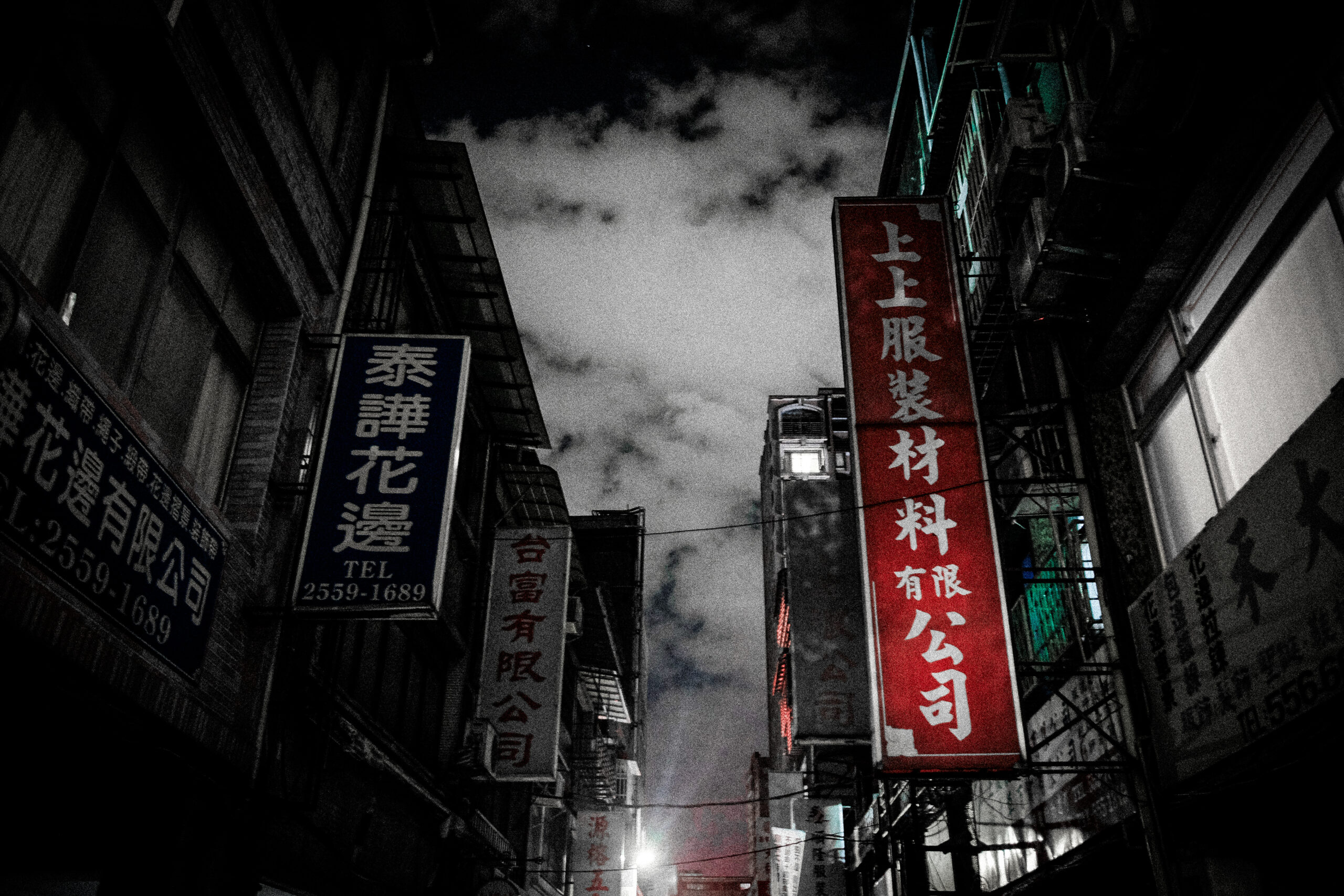
  • KAOHSIUNG | BLUE COSMOS CLAW MACHINE

    KAOHSIUNG | BLUE COSMOS CLAW MACHINE

    Blue Cosmos Claw Machine. Blue Cosmos Claw Machine. Blue Cosmos Claw Machine. The story of the Blue Cosmos Claw Machine does not begin with this piece of paper nor does it end when this ink dries. That is not to suggest that the story of the Blue Cosmos Claw Machine is infinite, omnipotent or omniscient.  Like all Claw Machines – it requires power (110V). It requires an updated billing address and method of payment. It requires a real estate lease, general liability insurance and a bare minimum of daily sanitary upkeep.  In short, the story I am about to tell simply could not exist without the vast and complex system and processes that allow for the Blue Cosmos Claw Machine – and all Claw Machine arcades – to exist in the first place.

    It was shortly after midnight on an unseasonably warm winter night in the supposedly bustling port city of Kaohsiung. My wife and I had just shared our fourth meal of the day – an unremarkable American-style hamburger and over-hydrated Japanese seaweed salad, unceremoniously paired with a French wine of dubious Chinese origin and a large Taiwan Beer draft. At the time, we were newlyweds on our honeymoon, newlyweds who still shared every meal, every drink, and every snack bite for bite and gulp for gulp. As evidenced in our marriage vows, bite-for-bite formed a bedrock of our relationship: in our ten years of dating, we had never ordered the same meal and, compared to our friends, we ate twice as many recipes and four times as many ingredients in a given calendar year. I am not proud to admit it, but we could not help but look down on those who ordered the same meal at the same time at the same restaurant – “we’ll have two tagliatelle fatte, please” – the thought disgusted us – it made us lose our appetite, if you will. 

    It was shortly after midnight in the supposedly bustling port city of Kaohsiung. I know because my wife asked me “what time is it?” and I – an American raised on the “imperial system” – originally named for the British crown but officially deserted in the 1995 by the British democracy – looked at watch, a Seiko 200m chronograph and for the first time in the fifteen years that watch had been on my wrist, realized just how absurdly waterproof it really was. “It’s 12:05” I responded as we made our way out of the bar-sturant. 

    “It sure doesn’t look like it,” she replied, and she was right. It was the Saturday before New Year’s Eve, and we had expected the downtown of the supposedly bustling port city of Kaohsiung to be crammed with night markets and choked with traffic. Instead, the city was emptied of pedestrians, scooters, cars, trucks, and public transit. There were no cats, dogs, bugs, or birds—only the occasional garage door left half-open, an elderly family member hanging wet laundry, and a fluorescent-soaked mechanic endlessly ratcheting something too small to belong to anything other than a scooter.

    With no sidewalk traffic ahead of us and no footsteps behind us, the city opened like one of the private parks that litter the streets of Edinburgh. Yes, from the way my wife swung my hand back and forth in pace with our footsteps, I could tell that it reminded her exactly of one the Scottish parks, guarded under lock, shrub and wrought iron – accessible only to the landed gentry with a key or foolish lovers like us, who had simply hopped the fence. We drifted toward the Love Pier, ducked into a convenience store minutes before closing, and bought a bottle of 58% Kaoliang liquor to sip if and when the mood struck. 

    As we turned the corner on Yingxiong Road and got our first glimpse of shimmering, technicolor Kaohsiung harbor, the mood struck and we cracked the threaded crown cap. Kaoling – according to our Taiwanese friend – was the type of bottle it took a whole army barrack to share.  I took a sip and then she took a sip and then I took a gulp and she took a gulp and it tasted exactly like what it was – fermented sorghum – and then I saw it – directly across the street from us – the bright blue lights  “Blue Cosmos Claw Machine.”

    No sooner had I seen the “Blue Cosmos Claw Machine” than I heard it. From across the street,  the warped 8-bit music leaked out – a humid cacophony rising from a hundred humidity-drenched computer chips. The horrible noise attacked my ears like a swarm of mosquitos each humming a different note, a different tone, with some notes that were melody and others that were just rhythm. Think of your favorite band (if all the musicians were mosquitos). 

    My wife looked at me and made the international hand gesture – two wiggling downward-facing fingers contracting at the joints – translation:  “let’s cross the street.”So we grabbed each other’s hands – in the name of safety? – and crossed the street. 

    “Fingers really look like miniature legs, if you think about it,”  I said as we walked into the arcade’s atrium. 

    The first claw machine had toilet paper. 

    We stopped, stared and ventured further. 

    The second claw machine had laundry detergent.

    “This can’t be real,” I said. 

    The third: bottles of Windex. 

    The fourth: bleach jugs.

    “Do you think people…” she began to ask. 

    “No way… there’s just no way. I mean, I don’t even think that claw could lift…” 

    By this point, we were deeper in the arcade than we had intended and the machines had multiplied – anime figurines, dildos, off-brand electronics, gaming consoles – and surrounded us so that we could no longer view the street. The claw machines – the only light source – saturated everything with their eerie blue glow – it was a blue that looked like the horizon of a sky without clouds – not the middle where the blue was a bit lighter, but the horizon, where the blue looked a little bit thicker, like a second coat of blue paint. I looked at my blue wife and my blue wrist with my blue watch when suddenly a flash of headlights shone into the arcade and just as soon turned off.

    We listened as the high heels clunk towards us. I motioned at my wife to follow me back to the street, but soon found ourselves stuck in what could best be described as a residential claw machine cul-de-sac – the kind where everyone has kids and one house has a basketball hoop that is missing the net and the painted-on-square (what is that thing called anyway?) – the kind of cul-de-sac you can’t live on in dangerous countries where robbers follow you home from the bank, from Starbucks, from picking up your kids from an international school in the middle of a financial crisis  – anyways, we couldn’t quite get out to the street view in time, so I made the international sign – five upwards fingers and a palm – and pulsed it twice, slowly – “hang on, let’s wait” – and walked over to the one claw machine with a pane of glass in the back instead of a mirror. The glass pane opened out to a mirror – and eventually, between reflections of laundry detergent and toilet paper, I spotted the outcroppings of an outfit – the torso of a tight, form-fitting blue silk kimono – a blue pillbox hat that looked straight out of the flapper era – and a presumably silver (it was blue) bracelet with several keys on them. With her was the top of a head – dark brown or black – but really blue hair – “I guess if you think about it, if humans were mountains, our hair would be the snow-capped peaks,” I said to myself – but this peak was clearly a hill – a baby mountain – a child that couldn’t even see the prizes inside the machines. 

    “Look Yokiko – this key is #14 – this is the one that opens all of the machines. It was delivered just like this from the manufacturer – if you lose it – you can simply order a standard #14 from the Comet Arcade Unlimited catalog. This key opens all the machine – and you see – when the PRIZE has been won,” she unlocked the case stuffed with blue mystery prizes wrapped in bubble wrap and took out a bubble-wrapped prize – of a bit different dimension – this one a round column unlike some of the more rectilinear boxes in the display case. 

    “And you see Yokiko – these prizes come from the shrine up at Yu Shan – they carry with them the powers of the ONE that grant the claw prize winner true omnipotency – real omniscience – forever omnipresence. All the claw prize winner has to do is believe in themselves.” And just like that the blue glove dropped it into the machine and locked it up. I saw the glove retreat and darted my way out of the cul-de-sac and forwards the location I had seen reflected in a mirror and a mirror and by the time I made it to the street – I saw two doors slam on a Mercedes Benz S-class and move away slowly into the night sky.

    My wife and I could not believe it. We made a plan. I would walk through the claw maze until my fragmented torso was exactly where the kimono had been – this was the only way we could be sure it was the right machine. Once we found the right machine, I broke our big bills into coins and then we got to work. There were about 12 cylindrical mystery prizes – some at the top and others at the bottom. The lower ones required the more rectilinear boxes to be removed first and before long we had a small pile of prizes stacked. We broke another big bill and then yet another. The Kaoling was slowly but surely disappearing, but for whatever reason, it seemed as if the more we drank the better we were at the claw machine. Maybe that was the secret? The claw moves with the sluggish incoordination of a drunk. Finally, we had cleared all of the cylindrical prizes. We piled them all into our tote bag and made our way to the street. Outside the sun was rising but everything was orange (the absence of blue).We made it to the hotel as they were opening up the breakfast buffet but went straight to the room and laid out all the prizes on the table. I don’t remember falling asleep that night, or what thoughts raced through my head, drunk and certain that tomorrow I would wake up as a God. 

    The next day we woke up at sunrise. There was an empty bottle of Kaoling and thirteen cylindrical wrapped prizes on the table, as well as some rectilinear ones.

    “Do you remember what that lady said last night?” My wife asked. 

    “Yeah she said whoever gets the prize from the shrine at Yu Shan carries with them the powers of the ONE – omniscience, omnipotent, and omnipresence – all they have to do is believe in themselves.” I responded.

    “Yeah that sounds about right. She also said all you have to do is believe.”

    “So how do you wanna share it?” I asked.

    “I didn’t really think about that.”

    “Maybe you can go first? And then I can try it next?”

    “Does it work like that?”

    “I don’t know but like… I don’t really want to be forever without you.”

    “But you would be omnipotent – so like you could make me forever with you too?”

    “I don’t know but the breakfast buffet is probably closing soon – maybe we think about this over breakfast?”

    “How much money did you spend?”

    “Whatever bills we had – so like…”

    “$4000 TWD?”

    “Did we get scammed?”

    “No, I think we just have to believe”

  • DA NANG | WHEEL OF TIME

    DA NANG | WHEEL OF TIME

    I work on wheels, as did my father and grandfather before me. Before him, too, it is possible there were wheel workers in our family, but I cannot say this with any real certainty; the human mind is a paper bag that can only contain so many groceries. The history of how I got here must share space with more practical matters like, did I pay the electricity bill? and, of course, how to fix wheels. 

    Sometimes people ask me if I fix bicycle wheels – like my grandfather – or car wheels – like my father – but no, I don’t – I only fix scooter wheels. They say there are 75 million scooters in Vietnam but I would go one step further and proclaim: there are at least 150 million scooter wheels in Vietnam, of which I own 2,000. My business is small in the scheme of Da Nang, at 20 cubic meters of storefront and another 400 cubic meters of wheel storage spread across the city. My store is called “Bánh Xe Thời Gian” (BXTG) – which, in English translates to “The Wheel of Time.” I always wish it was plural, but again, this name and the storefront were transferred unto me from those that came before me. 

    If I had to guess, I have fixed over 2500 wheels a month for the last 20 years. My wife would know best, she keeps all the records, handles the payments and maintains our finances, as did my mother and grandmother before her. Our system works and we don’t see it as work as much as we consider it revolution. The Earth revolves around the sun, while revolving itself, while we fix wheels. And somehow, yet, in purely angular terms, the wheels we fix revolve faster than axial rotation and orbital motion; little earths keeping our city alive. This is my favorite part of the wheel – the fact it spins faster than the earth, but at a lower linear speed. My second favorite part of wheels is the friction. 

    Anyways, last week I was fixing a wheel – #1723 of the month of June – when a young man came with an audacious claim. He said his great-grandfather got his bicycle wheels fixed here, his grandfather got his car wheels fixed here, and his father had gotten his scooter wheels fixed here. I welcomed him in, offered him some tea and thanked him for the wonderful story, as well as his family’s continued patronage over the years. He asked me if I had kids. I changed the subject back to wheels. He said if I did have kids, they would be his same generation and asked what type of wheel would they fix? This time I answered. 

    “Yes, I have two daughters. One lives in Japan and the other in Taiwan. Neither is married but they have plenty of time to make that decision for themselves. They don’t fix wheels – one works in healthcare and the other is a speech pathologist. They both take the subway to work. The subways have wheels but none of us have ever seen them. Even if we did see those wheels, there are no stores that fix subway wheels – those wheels are steel and not rubber. They turn slower than any wheels my family has ever fixed and they are not ‘fixed; but rather ‘reprofiled.’ It is a totally different art, one that belongs to a different family, perhaps.”

     As if not understanding, the young man asked again – “if they did fix wheels what type of wheels would they fix?”

    At first, I did not appreciate his stubbornness with this question – I am happy to speak about wheels from dusk to dawn, but not speculative wheels, hypothetical wheels, the future of wheels. Only the wheels of today. But as I thought of how to best answer his question, the words slipped out: 

    “Yes, my daughters fix wheels everyday. They fix the wheels trying to live a life free of pain and suffering. They fix the wheels trying to communicate their wants and needs, hopes and dreams. Yes, the wheel of tomorrow is the person sitting next to you –  those are the wheels that spin the fastest – I am old news, but you, my friend, like my daughters, are the wheel of tomorrow.”

  • HO CHI MIHN CITY | MOON SCOOT

    HO CHI MIHN CITY | MOON SCOOT

    “You never know what someone else is going through is a realization most people never have.”

    “Is that even a real sentence?” He laughed to himself. “I mean, really?”

    “A real sentence? What do you mean by that? As opposed to a… fake sentence? A lie?” They increased their pace. This block was empty and well lit – a little too well lit. It’s the type of block you walked faster, not slower. Maybe even the type of block you made sure to carry a glass bottle of some sorts – beer, wine, soda water, apple juice – in hand, just in case. “Why bring a knife to a gun fight when you can just bring an apple juice to the war” – he thought to himself. Yes, it was that kind of block – better lit than every other block. He saw their shadows projected on the pavers beneath them  – intricately arranged and easily removable as was typical for Vietnam – much preferable to broken ass American asphalt. America hated feet, ankles, toes, meniscuses, blood pressure. Crazy considering that Big Rubber burned the candle at both ends: tennis shoes and car tires. 

    “No, a lie can be a real sentence, too,” he finally replied, “like… ‘I Love You. I Hate You. Good bye. Bad bye…’ you know the sorts.” He did know the sorts. “I mean a real sentence as in… grammar, completeness, et cetera, etera, etera…”

    “You never know what someone else is going through.” Yes, they both knew people who had never had the realization. In those people’s defense, they weren’t even certain if they’d had the thought before either. Or at least, perhaps they had heard it in a saying – in a movie – “walk a mile in their shoes” type shit. But how many people really transcend the ego, the id, the sub and Supra consciousness and actually realized – no matter how close – how intimate – you can never really know what someone else is thinking. Not until they make some kind of brain reading machine – streamline the human genome. 

    Of course, politicians had their own approach to the subject. If we make these thoughts illegal, these beliefs prison-able, these emotions ostracized – if we reduce it all to let’s say – five allowed thoughts, feelings, emotions – three good and two bad for simplicity’s sake – perhaps we can know what our neighbors are thinking. 

    Fashion designers have their own approach to – if you wear this Tommy – this Ralph – this Calvin – you are no longer a person of infinite range and complexity, but rather, you are now this person in a box – for some a box of their own choosing – for some a box that others will never be able to get in. 

    They were about halfway through the block when he felt a pair of eyes on him. For as bright as the block was on the side they were walking, it was equally dark on the opposite. Dark shapes – most likely cardboard stacked up on each other – chairs stacked and chained to lamp posts – bike wheels missing bikes locked around astoundingly tall trees that had been whittled down to single trunks. 

    The moon was somehow perfectly positioned overhead – as if it were driving a scooter down the very same road and in the distance he saw the INSERT NAME OF TOWER the Vietnamese star – yellow and red – the brightest star in the sky. Oh, this would be the perfect picture. He should stop and take it – if he took it while walking it would never turn out right- and if he didn’t dial in the aperture and shutter speed – it would also never turn out right. There was no way he could ever fix it in an editing software – or patch it up to make the photo look exactly what he remembered. So he slowly fingered the aperture and shutter speed in his pocket – counting the F stops and T stops (?) – until he knew it would be a quick edit – he would need no more than 5 seconds to lock it in. He needed to get it just right, even if the photograph would never get published, printed or shared with anyone else. No, these photos were for him, personally. He used them – the perfect photos – for stories he would later write. And he would use the stories, sell the words, and then use the money to buy more film, more plane tickets, more photos. This was how he had gotten here in the first place.

    “It’s funny you should say that – about never really knowing what someone else is going through. You know I’ve been so in my head this trip – literally and figuratively – with my Eustachian tube disorder in my right ear, I haven’t been able to hear the outside world half as well as I’ve been able to hear my own spit. I’ve been so in my head – in fear- pain – despair I really haven’t noticed what’s going on in those around me. What made you bring it up?”

    “Well a few blocks ago I saw a Vietnamese girl – she must’ve been 25 or so. The pizzeria she worked out had just closed and unlike so many people we had seen on the walk, she wasn’t with anyone else or looking at her phone. She was just spinning around a pizza tray on the aluminum table in perfect circles, neither happy nor sad – but clearly occupied – thinking deeply about something – whether serious or silky I’ll never know but in that moment I realized – you know – you will really know what anyone else in this ward is thinking.”

    A homeless man across the street looked over to the bright side of the street. He loved his home _ the dark side because it gave him privacy and made him feel safe being so close to the bright lights. He saw the man – clearly an American tourist – and had a wide smile on his face revealing a few missing teeth – the right amount of missing teeth for a man his age who had seen all the things he had seen in life. He spoke Vietnamese, French and English and chuckled listening to the tourist’s conversation with himself. It had been years since he had heard someone who also liked to talk to himself – what a beautiful symmetry the man thought. He watched the tourists get his camera out and frame the shot – what a beautiful photo it would be if he set his aperture right, the man thought – the moon scootering down the middle of his street. 

  • ITALIAN DRESSING ROOT CANAL

    ITALIAN DRESSING ROOT CANAL

    Having built the lecture into a roaring crescendo, the great author Cleford Crowninshield III rolled up to conclude his remarks with a simple, irrefutable hypothesis: “ergo, it is proven – Q.E.D. – that the Devil is alive in the South!” 

    The crowd ate it up like fresh buttermilk biscuits with extra heapings of grape jelly, with applause and aplomb, as if served by the “help” on a silver platter. Through rapturous applause, they relished the author’s conclusion, identifying in it an evangelical vindication for their collective memories of Southern horror: running out of gas and moonlight on the Atchafalaya Basin Bridge in 1971 – tripping over invisible air at a Cherokee burial mound in 1983 – photographing technicolor ghosts on plantation porches in 1992. 

    A riotous applause, as if to say, the South had more Devil because it had had more Slavery and more “Believers” – more weight on both sides of the see-saw. The applause eventually faded and after a long droning queue to get books and ephemera signed, I was the last attendee in the bookstore. When the author realized I had nothing for him to sign, he stood up and sighed a breath of relief.

    “Do you really believe what you said up there… that the Devil is… alive in the south?”
    “Why yes, certainly! I have been to 49 states… and examined American Literature from Bartolome De Las Casas’ 1516 polemic – Memorial de Remedios para las Indias – all the way to The Da Vinci Code… It is my not-so-humble opinion, as well as that of the late William Faulkner, that the Devil does in fact reside in the South.”
    “Well,” I readied my hand, knowing throughout the lecture that it held 52 cards and more importantly, four aces: “have you ever been to Maine?”

    Bud’s was neither empty nor full, quiet nor loud. It was thoroughly average in all regards and made for a perfectly neutral place for me to invite the great icon of American literature for a drink. It had no discernable name, just an ancient Budweiser sign out front, and thus the locals all called it Bud’s. The great author – Cleford Crowninshield III – had never been to Maine and, much to my luck, had an inherent vice for cheap beer and an almost unfathomable hatred of the omnipresent, omniscient gas station wine they were serving at his reception (as noted by his purple tongue-in-cheek commentary that “Yellow Tail, Barefoot and Cupcake were his three biggest fans” and claim that they have found there way into every reading and reception he has thrown in the last 15 years – “a Bud sounds great.”

    We talked about his latest book – Mellow Othello – his upbringing in rural West Virginia – my theory on why I only set the alarm clock to odd numbers – his theory on the mental makeup of people who buy strawberries – my story about a time I saw a baby singing Pavoratti, standing proudly while being pushed by her mom in a shopping cart,  130 dB at a minimum – his theory on the Budweiser / Banana Laffy Taffy flavor continuum – and finally – having swapped out beer for whisky – and then whisky for cask strength scotch, the strongest spirit in the bar –  then and only then did we talk about Maine.

    “So tell me… why not Maine? I would imagine a man in your position…”
    “You know, usually when people ask I say ‘it’s simple, the only thing that scares me more than the devil lives in Maine’ and then they look at me all shock and awe and I let the pause linger… just a moment too long… and say ‘my ex-wife’” – I surprised myself with a fake laugh – “but truth be told, I’ve never been married,” Cleford let out a sigh. “Quite simply, I’ve never been to Maine because I’ve never been invited there. In fact, my agent says there is no documented sale of any of my more than 27 published works in the whole state. Maine is for me a personal anti-record, and one that I intentionally maine-tain.” 

    Another laugh, this time some real parts blended with fake. 

    I noticed the other patrons of the bar had a different glint than before – the hour was approaching eleven and the nine-to-five folks had discretely traded bar stools with the objectively more gnashed, late night regulars who would be there until close. The bar was no more or less empty than it had been, but the air felt heavier and there was a discernible increase in the attention being paid to us. Cleford, for his part, did not seem to notice the increasingly shady nature of the establishment.

    “Do you think you would recognize the Devil if you saw him?” I quickly followed up.

    “Absolutely…” he waited a second, his certainty turning to doubt, “not.” 

    I could tell the question took him by surprise and threw more bait on the hook.  

    “Even if you were seated directly next to him?”

    “A roaring lion… an Angel of Night… a nachash (or serpent)… these are just some of the many ways the Bible’s prophets described Him. Now would I recognize Satan if he was a moth flying around my living room? For all I know, the Devil is serving us liquor at this very moment… for all I know the devil is sitting directly across…”

    “What if I told you, the Devil lives in Maine?” I damned his thoughts midstream.

    “I would say… let me take a piss before you ruin my life’s work.” 

    Cleford stood up – a small 6’2 clad in a room of wide bodies – and swam through inquiring stares on his way to the bathroom. In his absence, I was left unguarded in the small parlor room. With my back against the wall and few discrete options as to where to avert my eyes, I looked at my wristwatch and decided to work my way to the bar for one last drink before we really got to Maine.

    “Say… these gentlemen here been asking me about you two,” she said in a voice so sweet it reminded me of the Budweiser / Banana Laffy Taffy continuum. “They” – she gestured to her left and her right and behind me “were wondering what two go-to-do fellas like yous are doin’ in Bud’s talking about the Devil. And so I tolds them – that gentleman with yous is the author who wrote the book they turned into the movie with Tom Hanks. I recognize him from the back cover – let’s just says” she winked not once but twice, “he’s my-kinda-man.”

    “Well it sounds like you answered your own question dear… what would these folks do without you?” I just smiled.

    “These ones are from the house and on the house,” she brushed a few flies away from the bar mat and poured a nondescript, thick-as-molasses spirit into two plastic saucers with ice.

    Cleburn met me at the bar and asked – “what are we drinking to?”
    “Fact and fiction” I hoisted a saucer. The spirit went down slower than liquor. In fact, it took about ten seconds for it to drip from cup to bottom of my stomach. He pulled a cigarette case from his breast pocket and we made our way onto the street and decided to have a little walk around the town promenade even though it was well past midnight. 

    “It happened about ten years ago. A colleague of mine was heading to the altar and, despite having no date or mutual friends attending, I decided – what the hell – I’ve been to 49 states and never Maine – I could use a little fresh air. Mind you this acquaintance of mine had few acquaintances of his own, and he himself had never been to Maine.” We crossed the street, following the flow of the town square with no particular destination. 

    “He told me he had secured me a spot at the lodge and that all I had to do was show up, so I flew into Boston and took the last Nor’easter there. I should’ve known something was up when the train emptied out in Portsmouth… when the attendant never came to stamp my ticket… when the last hour we moved through fog so thick I could see nothing other than my own reflection in the empty cabin.” 

    I took a pull from my cigarette, unaware it had gone out. Clefard handed me his lighter and said nothing more. I could sense the author in him had started to take over. He had already begun looking for holes in my story. Does the train really stop in Portsmouth that late at night? I handed him back the lighter and knew there would be few if any comments from him until the story had been told.

    “When I walked out at Old Orchard Beach, the fog had abated some and hung on the corners of the parking lot like the vignette of ancient daguerreotype. There was not a single car in the parking lot and the train quickly departed without blowing its whistle. In fact, now that I think back on it, I’m not even sure they closed the train doors heading back. I was spooked but assured myself, being surrounded by nothing was a million times safer than the city I had just come from, but in the city I had never felt so… afraid.”
    “Yes, fear and danger have less in common than we assume,” he pointed to a cockroach dancing on a manhole.

    “Just me, a suitcase and a Snickers walking into the unknown. The sound of my rolling suitcase on the cobblestones sounded like a broken muscle car reverberating through the crisp cold air. I convinced myself that someone was going to pop out of the alley and shoot me with a harpoon – that the roar of my 6 cylinder suitcase had turned me into a bonafide harpoon magnet.  So I ate the Snickers and carried my bag with both hands towards the shore and into the fog. It took me forever to find my hotel given how many letters the sign had lost over the years – Wi   L o te l – and after finally finding a door – walked into a room covered in wood colors raw and unmellowed.”
    “Raw and unmellowed, very Arthur Miller of you”   

    “Anyways, the attendant was off duty and had left my key on the desk. I went to my room and opened my journal and wrote – ‘a tired man sees no ghosts’ and I meant it.”
    “Haaa…” Cleford let out a bellowing laugh. “A tired man sees no ghosts, how raw and unmellowed. And a drunk man? One who has drinketh Bud’s molasses? What see he?” he changed his loud tone for a more subdued serious tenor: “You know… the first story I ever wrote – fiction, mind you – was about an 18 year old from a picture perfect family who enters a college fraternity only to discover that he sees ghost everytime he gets drunk. Eternity Fraternity.”
    “Never published?”
    “It was cheap pulp. I’m sure my agent will sell it when I’m dead – that tricenarian bastard,” Clefard scoffed and then readjusted his vest and jacket in one concise movement. “So… you found shelter from the storm.” 

    “Sort of…while I slept on the raw and unmellowed wood bed, the fog deserted the beach and found its way into my skull cavity – presumably through my nose and my ears. No matter how much water, how much tea, I woke up bearingless. I still knew who I was – who was President and who should be President – but my cognition – directions – balance – kaput!”
    “Like an earth compass on the moon?”

    “Like a sundial on the sun.”
    The notion made me suddenly aware of the time. We had walked quite a ways from Bud’s and the bookstore, but there was still sidewalk ahead and a story to be told.

    “Anyways – I say this only to set a realistic understanding of the events that followed. The wedding started at 6pm sharp – with a ceremony at the lighthouse followed by a reception at an old bunker that had once been part of the Harbor Defenses of Portland. It was a beautiful location and the bride had told all her guests to bring flags so there were flags of all shapes and sizes twinkling in the setting sun as empty cruise ships made their way out to the cold seas behind us. It was a short ceremony and if the groom noticed me in the aisle in the second to back row, he made no signs of showing it.”

    I continued, “needless to say – I started drinking at the bar – red wine mostly and made my way to my assigned seat at table 7 – relieved to see my name on the list as it was the first explicit sign I was indeed meant to be there. Table 7 was a mismodge of characters – there were two small children around the age of six, two teenagers, two octogenarians, myself and a man in his fifties who was equally uncoupled and seemingly restive. Resigned to our fate as seatmates, we started talking and hit it off immediately, much like you and I tonight.” 

    “You see, I have a rather… parochial… anarchistic – background and am kind of like a… historical… detective for hire so when the conversation starts with Solutrean and segues to Wabanki, I start to think and pick up on things and start to really notice the letters in each word and how language – spoken – is our fate, moving us magnitudes faster than the annual speed of the Mother Earth, moving us quickly to the edges of…”
    “Reality.”

    “Exactly.. the conversation at Table 7 was the edge of reality… first it was the salad.”
    “The salad. Of course.”
    “Yes, well you see, the gentleman next to me was spouting some very… how do i say.. unique perspectives on the history of the Northeast… well, Maine in particular. He claimed to have come into possession of a four-dimension map – time, being the fourth dimension – that told of an unspeakable fifth-dimension evil no man could comprehend. The evil moved through time and space like a pendulum but never making it past the White Mountains in the West and the ocean just east of Cape Elizabeth. The evil wreaks havoc on both man and beast wherever it travels – and it moves fast enough it can be in two parts of the state in the same hour – and it never stops moving unless…” I had never told the story nor played it back chronologically and the words escaped faster than I could pronounce them.

    “Unless what?”
    “The Salad!”

    “The Salad!” Cleford let out an honest to God laugh. Here he was, the guy who wrote the book that they made into a movie with Tom Hanks, on the second month of his book tour talking about the Salad in the late-night, middle-of-nowhere West Virginia air.

    “Yes, the Salad is when I realized where the pendulum swung – and how to… It started with the olives. We were talking about the bunker from the War – the War before that – and I believe the War before that – when I got an olive just like the others but with a pit. Mind you olives are my favorite food, I know immediately when they are pitted and not. Fortunately, I had been eating with my best manners and, as such, taking rather mild mannered bites, so I returned the pit to my napkin, made sure my tooth was there with my tongue and returned to the conversation. Nothing out of the ordinary, but not the kind of thing you forget either.” 

    “The Salad!” Cleford was now incredulous and I realized at some point in our conversation, the sidewalk had ended and we had walked just far enough from the edge of town that our horizon had become nothing but a moonlit silhouette. Time to wrap it up, I thought. 

    “So I return to the salad and the conversation, and he turns to me and says “what’s the matter, did you get a pit?” and I said “yes indeed,” and he said nothing and I took another bite of olive and it too had a pit and I took the pit out with my hand and it was a tooth and he looked at me incredulously and said nothing. I dabbed around my mouth with the white napkin but there was no blood. I had to know for sure though and ate another olive. To my sheer horror, I found another tooth – a fat molar with a bifurcated root. And another tooth – an oversized canine with a worn gold filling. Covered in Italian Dressing.”
    “That is…” Cleford sighed and looked as if he might be sick. He burped and gagged a bit and I helped him over to a cinder block Fireworks stand that was not currently loaded… “disgusting.”
    “By the time I looked up from the third tooth, the man had already begun to make his departure alone towards the boardwalk. I felt the morning fog fill my head again and  my way over to seating arrangements, finding only 7 names at the table of 7. Who was the 8th man? The man I had been talking to. I had to know.”
    “Now as I was walking out” I started to remember the adrenaline, as if seeing the great author’s despair had increased my vigor, “I walked right by my acquaintance and… just me and him… and his eyes just went right through me… not the slightest recognition on his face of not only myself, but any physical matter approaching him at a distance of two feet away. But I continued on, seeing the ember of a cigarette of the Eighth Man. It started as a crawl and then faster and I broke into a full sprint to get my arms around it and stop the pendulum swing and  meet some answers and so I tackled him and we got into a fist fight and he burned my right eye with his cigarette and I pulled out a knife and we slipped down the rocks into the water – ocean water turning hot blood cold – and he told me ‘you just stabbed the devil’ and I laughed joys of pride, knowing I had ended fifth-dimension suffering beyond human comprehension” I looked around to make sure no one was watching. Cleborne was still crumpled at the waist. His slow heaving slowly picking up momentum, woozy air bursting out of his diaphragm, he looked at me in textbook horror.

    ”But the Eight Man grabbed me by the neck and said ‘I guess that makes you the devil now’ and pushed himself off me and into the sea. And just like that…”
    Cleborne vomited abruptly and keeled over. I gave him a hand back up but he struggled to regain his poise. It was time for the punchline. I moved my hand to the worn, sticky blade on my hip. I knew it would all be over any second – that preeminent scholar on all things lucifer, the man who spent day-in-day-out researching me, the only threat to my benevolence, would never make it to Maine. Cleburn looked me in the eyes and knew it was time.

    “Italian Dressing?” he laughed maniacally. 

    His soon-to-be last words caught me by such surprise and I froze up. Instinctively, I put my right hand into my mouth to feel for my teeth. Were they all there? And in the instant, I felt it crash down into my nape, my scapula, my lungs. My trashcan of life had officially been dumped into the garbage truck hopper. Death was Peterbilt 520 covered in shit and Cleburne Crestinshield III was now the devil and as I lay dying he crumples over and says “Italian Dressing was actually invented in Massachusetts” and throws up again.

  • GRACKLE SHAKE FALL

    GRACKLE SHAKE FALL

    My friend Theo grew up in a small town on the west coast of Florida. When we would get drunk at bars in our early twenties and find an audience of beautiful strangers and the subject of Florida or orange juice came up, oh how quickly Theo would break into the story of Big Juice International – how they burnt their orange rinds every Tuesday – and the whole town took on a fragrance of orange zest – candied peels – he would grab her arm and smell her wrist – “just like you.” Five million gallons of juice passing through the town – they had even installed a sewer system just for pulp – “get your mind out of the gutter” he would wink deep and slow like an orange being squeezed.

    At first it was a cool story and all – small town America in all of its small-box, mom-and-pop, landlined glory – but I slowly began to loathe the incessant conversations about orange juice weekend after weekend – “nothing like blood orange sunsets over a rail yard full of juice… talk about romance!” he would lead her gaze off towards drunk lovers necking in the alley.

    This went on-and-on-and-on. Two years? Maybe three? It was not ideal – especially as we were both living in New York at the time and trying to branch out a bit from our collective Southern pasts. But I was young and had not the slightest intention of holding those around me to any particular social standards provided they were honest or transparent (one or the other would suffice). Not everything said had to be earth shattering – not even worthwhile – so long as the long arc of the weekends was good.

    We were at a party in the Upper East side when it happened. It was the second week of August and  – you guessed it – someone was drinking Big Juice International. Before I get to the story, I feel it important to note that people have always liked me. Half of them because I am less of an asshole than they are – and the other half because I am more of an asshole then they are. But regardless of how they felt – I knew deep down that I was a class act, a regular old Dale Carnegie. I spoke ill of nothing and noone, let my words breathe and, no matter the breadth or width of my substance intake, never hogged the spotlight. In fact, I gave one-uppers a wide berth and was always very intentional with my gift of storytelling.

    On this particular evening – something was different. The city had been tense all summer – talk of war in Europe, dramatic inflation, and of course, the most nefarious word in the NYC vernacular – a “bubble” – each week felt like the toss of a coin. As junior analysts at Big Money, we were living on the edge of a razor. Everyday hacking our way to the edge of collapse or running away from contagion as fast as we could – we danced in all directions on the edge of the waterfall. The weekends became like tomato plants – unwatered in the weeks, they grew no fruit on the weekend – and the daylight waned. The city had been tense all summer and I had been tense too. I had not been laid since I received my promotion in the spring. I had come close but alas… orange juice.

    It was a typical Saturday night in the city. She was drinking Big Juice International with Tito’s. He had smelt her hand – she had such elegant wrists and a collection of bangle bracelets that looked impossibly and effortlessly curated. He had taken her mind to the pulp gutter. Her laugh cackled like bitter lemons and limes. He had led her gaze to the alley – her eyes moving like an independent entity of their own – bold and confident pupils in contrast to her otherwise shy and quiet demeanor. I couldn’t take it anymore.

    “Small towns are the weirdest. You know, in the north Texas town I grew up in, all the leaves fall in the second week of August… without fail.”

    “You don’t say…” Theo eyed me suspiciously. Here I was – a conniving character from Macbeth interrupting his fiftieth recitation of King Lear.

    “Every year,” I drowned him out, “the birds would come from supermarkets all over the southwest and congregate in our little food desert of a town. Thousands of grackles covering every limb and branch in the whole locality.” I was blowing it – locality – what a definitively unsexy word. I flapped imaginary wings to make up for it, but it was certainly no wrist smell.

    “The birds would chirp and chirp and chirp and shake all the branches until one by one, all the leaves had fallen off the limbs.”

    “It can’t be…” Theo lay there spellbound. He had never heard me say a word about my past. And why should I – New York only exists in the present.


    “Until I was 15 years old I thought that fall was caused by birds shaking all the leaves,” I said, reviving a repressed southern drawl.  “You can imagine my shock when I finally made it to Colorado one October and saw oranges and yellows and reds and greens beyond my wildest imagination. It was like seeing God – or perhaps more like – unseeing God. Yes, I was 15 when I learned that fall was a meet-eee-or–olo-gical phenomenon” it was working. “And not just some dance of the birds. Anywho, that’s why I ended up in New York.”

    She leaned in and her body shrank back at the same time and her eyes said “Birdboy – you’re coming home with me” and that’s exactly what happened and now Theo and I spend our weekends talking about grackles instead of orange juice.

    “Bckawwww!”

  • MASON TAKES A WRONG TURN

    MASON TAKES A WRONG TURN

    Mason – “he” – had taken a wrong turn somewhere, somewhere along the way as the cliche goes. A wrong turn – arguably his first – such things being unknowable. Yes, a wrong turn, as if implying that every step must be wrong or right – a binary of absurd proportions – a quantum calculation with impossible causality – for three rights make a left – and how could three wrongs make a right?

    “Yes., three wrongs make a right” he proclaimed – interrupting the absolutely minuscule roar of the mesa. A roar of eagles, wolves, crows and bears – but infinitely small – like the noise of someone else wearing headphones in the library. Among this quiet roar, his words rung and wrung. He had gotten lost on the trail.

    It was not serious – by all reasonable standards, he was safe, located in an undeveloped bend in the farmland that flowed through the valley so smoothly, unperturbed – the Valley of the Ancients – the Painted Hand – the temperamental cradle of civilizations past. The farmland nestled the valley delicately – as if an extension of the river itself – the river the spine, the farms the ribcage. It was in this undeveloped curve of the spine – a sprawling stage of sage – that Mason had taken a wrong step. It wouldn’t have matter one dime has it not been for this on fact: Mason had never taken a wrong step before. As such, his existential defense were absolutely nonexistent – his rational immunities, null.

    He froze up and stopped, more like a hunted-and-shot deer than a deer in the headlight. He tried to remember his last step – and the step before that one but he could only (re)member the present. His whole inertia zero – the definition of living the present – no movement – stillness. Yes – – – he was.

    Mason refused to take another step in any direction. Instead, he drew himself into. A circle in the red clay dirt – circumscribed, he scanned the six directions – North, South, East, West, Above and Below. From his new court, he could see three directions – but the only one he knew for certain was down. Up and down need no compass. Gravity and electromagnetism being rather disparate phenomenon. He could definitely see down. Intuitively he knew this must’ve been where he had come from – for directly behind him rose an impenetrable canyon wall.

    So he was going down – the thought fell like the accelerator on a car stacked on cinder blocks – the engine missing for 20 years.Mason had stepped off the right path – and inn doing so – he had stepped out of himself. He had not managed to pack any memories with him before he made the leap between right and wrong. Like a “Christian Reborn” or a suburb-dweller hitting a bong of 10x salvia on a Rooms-to-Go Couch and then being coming said couch – existentially – Mason was existentially reborn,. He was nothing. Nothing!

    He was a portrait of landscape – of flowering serviceberries bushes and runs of rabbitbrush – a forest of berrying juniper and piñon pines – a floor mat of Indian Ricegrass and prickly pear he was the quiet roar – he was the sun – out of site but ever-present – the third eye, the sun – he was the sun and the moon – chasing closer than they had been in 121 years – he was the rock – the most important four letter word – he was the breeze – he was he and she and it and their and us and we and them – he was nothing and as such, he became Everything.

    For all intensive purposes – Mason was back in the animal kingdom – the Apple unbitten – Back with the field mice and prarierw cats – and the vagrants and the transients – four-wheeled shipping cart pushers – “at least a shopping cart will never break down” – Everything had whispered to him.

    Mason was an animal that could only climb down – and down he fell – like a crow that flew so high – so so high they could see the curve of the earth – and mankind’s curve with it – the vast expanse of suburbia – the shock of realizing genocide – falling to the earth – rigid before ever hitting the ground. Mason could only go down. Gravity compelled and he complied. Down down down. The more he went down, the less down he could see – and when down became flat – surrounded by pine forest bluebirds – bluer than the bluest blue berry – he began walking in a straight line – stopping every 20 passes – looking back and forward – calculating Orions Belt – and proceeding straight with surgical percision.

    So straight he walked – unchallenged. And once he was satisfied he had taken hundreds of right steps – he abruptly pivoted ninety degrees to the left – and took his second wrong turn. Now, he was Everything – and Everything is water flowing and oxygen and hyrdogen and hydroxygen and oxyhydrooxygen projecting volume – matter – and matter did not betray Mason – it led him safe and clean out of the forest and into an acre of ancient corn – unharvested for centuries – petrified stalks spanning generations – new ears bursting through the seams wherever they could – and through the ancient corn forest to an even stranger place.

    A place with no trees – one rock – flat and smooth and level – a rock so did\fferent from the canyon – for it was entirely uniform in coloration – barring the yellow looses cast hauntingly like sunbleached shadows – and among this giant stone slab was a machine – well, it looked and functioned like an animal, but it was also mad eof uniform parts 0 and nature, other than water and sky, has no such thing. He saw other machineanimals sprinting by on the stone that connected the slab to a network of slabs- presumably slabs with other slab animals and so on. He walked over to the animal and saw himself it’s its glossiness.

    Himself – Everything – a two legged creatures with two more short legs – not quite wings – but flapping regardless – and a stone that broadcast the center of perception – for when human eyes meet their reflection, there is simply no other conclusion. The two legger, half winger stone pedestal was covered in fake skin – again of a consistent and uniformity begot by machine – and in this skin – which he actually quite enjoyed and admired – he found a little machine with buttons that when piushed, spkke with the machine animal and made it bark – so he fed the little machine to the machineanimal – chucking it onto the slab, right between the animaleyes.

    He then turned around and walked back into the corn forest – and in doing so took his third wrong step.

  • AVG. # OF GODS

    AVG. # OF GODS

    She called shortly after midnight. The call seemed to come at both the right time – Rodge having just stumbled back from the pool bar – and entirely “out of the blue,” as they say – it being lightning and blue being the sky. Months had passed since Rodge’s phone last rang. No one had the number. No government. No telephone company. And certainly, no friend of his.  It was never not a “wrong” number. So you can imagine Rodge’s surprise when he heard a familiar female voice on the other line.

    “Hey Rodge. I found a job for you”
    “Eden?” he presumed.
    “Sorry to call you so late, but it’s 9am here in Kathmandu.”
    “Does that mean you’re still in the Service?”
    “You could say that…. new boss is a little different though.”

    Despite their distance, Eden knew Rodge was living on the down-and-out – that it had been three years since he last flew commercial. She also knew that he was not actively looking for work, content instead to live on the fringe off his veteran’s pension. Well, the rate was $15,000 cash for one 57 minute flight. The aircraft and clientele had already been arranged. She told him to go on a run in the morning and sweat out the booze. No cologne either. A uniform would be provided to when he showed up at the depot. Rodge jotted down the address and could sense the sun was now burning down on Kathmandu. Rodge could almost hear the prayer bells in the distance. She asked if he had any questions.

    “Yeah Eden… why me?”
    “Well, Rodge, you have been specifically requested by the client, if not by name, then by definition” she paused. 
    “And what definition is that?”
    “The client wants a pilot who had flown in two wars but never killed. And according to our records you’re the only one.” 


    Considering there were about twenty planes in their service, Friday was a surprisingly quiet day at Eye of Ra Tours. Rodge’s flight would be the only flight for the day – as per the client’s request. In the afternoon sun, the hangar’s tan and weathered plastic paneling glowed like abalone and the air was thick with the dulcet esters of industrial  decomposition. 

    The depot was a rather peculiar business tucked neatly among various turn-of-the-century warehouses on the docks of Sheepshead Bay. Rodge had certainly heard of Ra’s before. For years, it had served as a clearinghouse for pilots passing through New York City – war heroes and adventurers alike readjusting to civilian life. Eye of Ra was one of the few places a pilot could work as much or as little as they wanted. It had employed some of the most famous pilots of every generation. And it had a perfect track record. As such, the clients were almost always industrious and influential. Presidents, world leaders, CEOs and the like. The service that Eye of Ra provided was second to none. After all, Eye of Ra was the only operator of aerial tours in New York City and the waitlist was nine months long. 

    Upon walking into the hangar, Rodge spotted their ride basking in chrome. The Cesna 306 – Atropos – weighed 2199 pounds on the ground – unfueled. Next to Rodge’s wide shoulders and elongated geometry, the plane looked like a toy. 

    “These planes lose about 5 pounds a year. That Big App-mosphere is real tough on the ladies. You know, normal wearin’ and tearin’…. city clouds… vinegar rain…” the tech droned on with nervous energy, as he loaded Atropos up with 554 pounds of fuel. “Alright that gives you gents about 1350 pounds to spare. From what I hear, our client will be travelling light.”

    On the other side of the propeller, Captain Rodge Pierson nodded along, “1350, check”  but his mind was entirely elsewhere. Rodge had been at the hangar for over an hour and his silver SEIKO now struck 15:37pm, meaning his copilot was already seven minutes late. Around the edges of silence, Rodge could just make out Glenn Miller’s trombone whispering from some unseen, dusty AM radio like the prayer of a ghost. 

    “Say fella – what’s the last bird you took up?” the tech inquired, trying to make the seemingly tense Captain comfortable. 

    “DC-9. 95 seater.” Rodge said without a hint of emotion, crouched over and inspecting the landing gears and tires. He kicked the tire. It didn’t flinch.  

    “And before that?” the tech pried.

    “Hercules C130,” Rodge looked him right between the eyes. 

    The tech had pried far enough. He had read Rodge’s file – seven trips from Vietnam to San Diego in that four prop. Not easy to do. And ten stints on the casket tour before that. Harrowing stuff. He changed the subject.

    “How about that DC-9? Heard it flies like a dream. Like a dream on autopilot.”  An awkward silence was no sooner realized than it was interrupted by the sound of a heavy metal door opening. Rodge saw a thin man with bold features glide across the rubberized cement, left hand outstretched. Despite the explicitness of the stranger’s youth, Rodge was impressed by the man’s sprightly nature and air of gravitas. 

    “Jona Arces,” the stranger projected like practiced poetry, phrased and intonated like the start of a sentence to be continued. “I believe we’ll be taking Atropos up together this evening. Don’t let the myth fool you, she really is a lovely lady.”

     “Rodge Pierson,” Rodge replied, closed sentence and all. 

    “Ahhh yes, they told me about you. Quite peculiar circumstances if you ask me – but then again, peculiarity is our profession – and conditionality part of our condition. For what it’s worth, you look exactly as we imagined.”

    A velvet glove – the words caught Rodge off guard but were delivered with such perfect nuance that no verbal response could logically follow. Gauging his soon-to-be copilot’s discomfort, Jona added “That is to say you look exactly like a man who has flown in two wars but never killed. For what’s it worth, we all think this is a good thing.” 

    Jona’s repeated use of “we” made Rodge immediately unsettled. Rodge had not asked a lot of questions when he signed up for the job. Sure, the whole scene was a bit eccentric to say the least, but he had not noticed anything amiss when he checked-in with the receptionist – just normal wearin’ and tearin’.  But somehow, Jona’s use of we and all made Rodge very nervous. The whole scene was a bit eccentric to say the least. At least, the money was good and the plane would do. Plus Rodge had been to war. Twice.

    “Did they tell you who we’d be flying today?” 


    The clients arrived one minute late. Upon seeing the three passengers walk in, Rodge sighed noticeably, as if his worst fears were suddenly realized: yes, he thought, this must all be some sort a progressive thought experiment. Here was proof that there was in fact a we – a brain trust organizing this strange activity – and it was that we who requested him – a killless warpilot. As the passengers made their way from the human-size door to the Cessna, Rodge matched their faces up with what Jona had just told him. 

    Right in front of Rodge, in saffron and maroon, with a smile of eyes equivalent to that of mouth, was no other than the 14th Dalai Lama – Tensin Gyatso. To his left – the presumed “intellectual ringleader” of the whole affair – Patvo Lugo sauntered in like a marble bust heavyset on human legs. A short and grotesque man in his early forties with wild hair curled in a congenitally unconventional way, Lugo was an inimitable intellectual force. As a former Poet Laureate, a famed TIME Magazine Correspondent, and Hollywood’s hottest new director (surrealism masquerading as progressivism), Lugo’s detailed authorial lens had no Leica counterpart. And last but not least, there was George, a homeless man the Dalai Lama had befriended at the station who smelt of barley wine and knew the New York streets better than just about anyone. There was an extra seat in the jet so George accepted their offer to join along.  It was quite the menagerie. And Rodge had no idea who was paying for it all.

    The Cesna 306 is a small plane by any measure. One look around the hangar and it’s obvious that the 306 was the smallest animal in Ra’s ark. The one prop six seater was not for the light of heart. Like a Cadillac De Ville with wings, the passengers were tightly circumscribed by aluminum on all sides – their faces often no more than 5 inches separated from the rushing silver atmosphere. In the 306, the passengers could see and hear in all directions except behind them. It was in these narrow confines that Jona Arces really excelled. Unlike the majority of Ra’s regulars, Jona had never fought in a war. He was too young for one and too busy for the other. Jona had a dual master’s degree from Harvard and was highly informed in all things. He had three opinions on everything: the one side, the other side, and the truth. And he could switch between them all with ease as context and conversation required. Jona was a conversationalist through-and-through and typically served as the narrator of Ra’s City Tours – while simultaneously performing copilot duties with deft confidence. Jona was drawn to the profession not by a natural love of aviation, but rather an affinity to mix and mingle with the rich and famous. 

    Once on the inside, the scale and intimacy of the 306 caught Rodge offguard. As the tech closed the door and latched it from the outside, Rodge felt an immediacy that reminded him of the elevator door at the Pentagon the day he had walked away from it all. But the feeling came and went without leaving an impression and Rodge maneuvered Atropos to the end of the runway and then turned the craft around so that it was facing the harbor the way a bull faces a torredor. 


    Rodge and Jona had agreed to pilot the 306 manually – both agreeing that autopilot onboard was prehistoric – a relic of technologies best forgotten. They had also agreed that Rodge would take her up and down – but Jona guide her around Manhattan’s slender geography. A warm summer rain recycled itself into the ocean south of them. Rodge was to keep an eye on it. They checked the gauges, illuminated the beacon, and readied the throttle. Rodge let off the brake and boosted the throttle to 1700. Within moments, the small plane was gliding over the tarmac and slicing its way diametrically into the evening breeze. Jona had never witnessed a cleaner takeoff. At 12,500 they crosschecked and Jona took the reigns – holding the grip casually with a single hand – as if out for an evening drive. Rodge took a deep breath out and repositioned his center of gravity so that his long frame was neatly tucked out of Jona’s periphery. In the back seat, the passengers had yet to say a word

    The Dalai Lama had never seen New York City from above. They were to fly west over Williamsburg, then trace Manhattan’s finger at an elevation of 12,500 feet. The total route was to clock in at 97 minutes. Patvo Lugo had specifically requested that the Dalai Lama see and not be told – that the Bikhu be allowed to observe the city from his own temporal vantage point. They were not interested in the architecture or construction techniques, nor concerned with the city’s history – its short existence paling in temporal comparison to the elements. No, Lugo just wanted the Dalai Lama to see mankind’s latest creation – whether enlightenment or folly, without judgement – to experience, not understand. If any of the passengers – including George – had a question, the pilots were instructed to answer it. The client also specified that the pilots were permitted to speak to each other unburdened and without preponderance. But other than that silence was expected. The whole flight would be recorded on a cassette tape that was to be replicated and sent to Metro-Goldwyn-Meyers (MGM) and the Library of Congress.

    The first five minutes of tape are largely silent other than a few remarks in the cockpit spoken in aerial vernacular. The silence belied the five men’s fascination and awe with the ability of mankind to command the skies. Jona eased her off the pitch and pointed her ballast towards the mass of Creation ahead of them. The sun had already set in the East and was now starting to set in the West. Rodge kept his eye on the warm summer rain clouds but the diminishing sunlight made them increasingly indistinguishable from the clouds of night. They were now over Manhattan and Jona was taking his usual route, only backwards. He would work his way up the FDR Drive – past the United Nations tunnel – then veer East – passing wide over Riker’s Island before traversing back towards the Bronx – and Yankee Stadium – Harlem – and work his way down the Hudson Parkway – all the way past Wall Street and the Statue of Liberty. He had never done it in reverse but could understand the rationale: Industry, Politics, Prisoners, Culture, Money and Freedom – as if to say these are the institutions that FREEDOM FEEDS. 

    Finally, George could bear the silence no longer. “You know, I’ve spent my whole life on these streets and never thought to ask about the name – who was Mr. Manhattan?” A common question, Jona thought.  “Like many other American cities the word itself predates the meaning. There are several theories as to the origin but all agree it comes from the Lenni or “Delaware” Indians. It either means “island of many hills,” “place with wood for bows” or “place of inebriation.” 

    “Yes, and which is it?” Lugo asked, sarcastically hinting what they all knew.

    “Well I guess all three would be accurate, I suppose”

    They were now passing the Village and the grid was checkered. Vast shadows overlaid with perpendicular avenues flooded by the infamously orange sun. The mica-laden sidewalks glowed like gold and even from the air, you could tell the weekend was getting under way.

    “Can you believe that I am one of those people?” George asked.

    “I hear there are 7 million men and women in the city on any given day.”

    “Ahhh just my luck” George proclaimed. He knew the city was always bustling – in fact it had been a while since he had seen the same face twice – but seven million was simply beyond his comprehension – it reflected a scale and perspective he had never known. Now sitting between the Bikhu and Lugo, staring at the strange beast through the cockpit window – he suddenly saw his own insignificance. If each person in the city represented an average of one person, and some people had the same power as thousands of others, he understood he must be less than one person. “Must be the reason I can never get God on the telephone.” 

    Lugo jumped on this line of questioning. “Well George, which God are  you calling? And is he the only God in New York City?” 

    Rodge looked over at Jona, whose face now seemed stowed in a smiling, plastic position, and wondered if he should speak.

    George replied “I worship The One.” Funny how everyone knew the One, Rodge thought. As if One God was better than Millions. Rodge had never understood the allure of monotheism. This was the narrative he was spoon fed his whole life, but does not a child identify more with the anthropomorphism of Zues and Poseidon than a shapeless, formless ONE?

    “Ahhh yes, the ONE – Yahweh – the same god shared by the Three Abrahamic Faiths. It certainly is an interesting math problem.” Lugo admitted. 

    Rodge had done the math before. On a long flight back from Vietnam – the casket tour. With help from his encyclopedia, he mapped it all out. X believers of Religion Y with Z amount Gods. He had found that the God variance was extreme. The numbers didn’t lie.

    “73 humans per God on average” Rodge said. Jona shot him a glance. “I’ve done the math.”

    And just like that, Lugo came alive. In his newfound excitement, a faux-European accent rose to the surface like some strange excavated city. He pressed the recorder to the cockpit – “Can you say that again sir? Not just the words, but also their meaning.”

    “73 humans per God on average. 3 billion humans on earth. 41 million Gods.”

    “Out-RAGEOUS!” Lugo shouted. 

    “That’s why I converted to Shintoism after the war. Eight million Gods for the 100 million of us. It was either that or Hinduism – 33 million for the one billion. So I chose the Shinto and now share a god with twelve.”

    “And I suppose I share a God with 1 billion people”  George muttered.

    “And I suppose I share no God with anyone” Lugo could simply not contain himself. “Average number of Gods – OUT-rageous! – and you mean to tell me that there are 41 million Gods in NYC?”

    By this point, Jona’s plastic tray table of a face had started to warp. Rodge could sense in the wrinkles that Jona had underestimated him – thought him some jaded kill-less two-warrer, content with suffering idly in the bedding of his discontent. And Eden – take this money and sweat out the booze. People always treated veterans like the war ended. But Rodge knew that the war never ends. It goes from the physical to the emotional – and if you make it far enough – to the spiritual. And the war wages on and on in the bodies and minds of men around the world. Yes, Rodge could tell Jona was losing his smooth veneer – and even sensed a hint of intellectual jealousy in his scowl. Rodge let the pride float right by him – and slowly backed off. 

    “Yes, in theory – although I do not profess to know where Gods ‘reside’” He was not going to leave his copilot hanging.

    “AND HOW MANY MILLIONS DO THESE GODS HAVE?” Lugo asked – pointing down at the Wall Street promenade below them – clusters of androgenyous grey and glass buildings with windows that saw out but never looked in. “Reminds me of an old poem: 

    The hawk makes his nest
    in plain view – unlike the others.

    Rodge waited for the rest but it didn’t come – that was the poem. He loved it for reasons he could not articulate.

    As they passed the Statue of Liberty, Lugo inquired of Jona – “how much does freedom weigh?”

    “Sixty two thousand pounds of copper and 250 thousand pounds of framing and 54 million pounds of cement.” 

    “So less than the 7.5 million tons of munitions dropped on Vietnam?” The words made Rodge shudder. “Freedom weighs less than bombs – I think that makes some sense. Old Freedom weighs less than New Bombs – I think that makes more sense. But without Freedom, you would not have the city we witnessed tonight – no way no how.”

    The excitement in the craft was palpable. Jona’s gambit to reverse the order of the tour and build up to freedom – combined with the preposterousness and increasing elevation of conversation had filled every cubic inch of Atropos with wonder. Rodge was still reclined when Jona smiled at him and gave a small salute. 


    “Crosscheck. Twelve miles. SSW. Fuel Tank 30%.”

    Rodge re-engaged his grip sticks. Night had firmly gripped Brooklyn and dark, amorphous clouds seemed to hover over the land mass like lost sheep penned in by a fence of river. Somewhere between Wall Street and Freedom, Rodge had taken his eye off the storm to the south. Whether it was the presence of holiness – the fact his mind was turned on for the first time in a while – or simply his years of muscle memory culled from one-way flights, where a jet plane can always outrun a storm, Rodge had not spotted the lightning – and now the five of them saw it all together for the first time – not more than two miles away from them. Lugo had found his voice and was now free-versing poetry into the recorder:

    I like rain more than anyone I know – 
    except small bird eating worm –
    vulture on industrial lamppost –
    witch waiting for reincarnation – 

    And with stanza, the rain started thrashing against the plane – assaulting every aluminum surface all at once. The plane dropped and rocked as the propellers chopped the rain into a billion little pieces and then a billion more. Neither pilot was a stranger to atmospheric hostility, but the lightness of the plane – and the brevity of the runway – gave them an incredibly narrow margin of error. Billions of raindrops became trillions – as the chrome propellers pulverized the rain back into cloud vapor. The Dalai Lama looked out and saw a visage as older than man. Lightening – striking the entire Earth an average 100 times every second. Each strike, enough electricity to power 56 AMERICAN houses for a day. Power, of which no amount will ever be enough. A mile from the Brooklyn coast, Rodge finally turned Atropos into the cloud corral. The radar proclaimed the plan no more than 2,500 feet off the ground, but not a single sign of life was to be seen above or below them. They were in the Ether – they could have been anywhere in this life or the next. 

    “Thank God for Autopilot” Lugo proclaimed, himself a fierce technodeterminist. “Yes, that is what I’ll name the movie – ‘Thank God for Autopilot,’” he laughed. “Out-Rageous.”

    Jona and Rodge looked at each other nervously but neither spoke. Fifteen hundred feet and dropping. One thousand and still no floor. Rodge had calculated the descent before they had lifted off. He was going to drop her the final one thousand feet at an angle of -23 degreees for the final minute and a half. He directed the plane to the “drop spot,” set his stopwatch and let her slice. 

    On the way to Earth, there are two downs: the descent and the dive. One of them gets you to land safely, while the other instills fear in the hearts of man and Gods alike. Jona cleared his throat and spoke up for the first time in what seemed like an hour – “Lugo, there is no autopilot.” 

    The plane descented, dived, climbed, and descented.

    “Just as well,” Lugo responded like a true existentialist. “Well you lads do whatever you deem fit. Land her if you want, crash her if you prefer, just whatever you decide, please get us out of these cloud – if there is one thing I can’t stand it is a short depth of field.”

    It was then that Rodge realized they would be alright. No matter whether the ground was 1,000 feet below them or six feet above them. He had flipped a switch. He greeted Kuraokami – the Shinto dragon spirit of rain – and Susanoo – the Deity of All Storms. Not a Western prayer, but an Eastern acknowledgement. He was not asking for “safe delivery” – there was no begging or pleading – no “do this for me.” Rodge simply said “hello old friends.” Somewhere in the background Jona was speaking to him – and Lugo was speaking to Jona – each treating the other like an American God – pleading – demanding attention. But Rodge was lost in meditation. He was counting down from thirty, hands perfectly still, breaths deep and full. 

    Rodge didn’t even notice when the city floor reappeared at 100 feet – sure, he had heard Jona shout orders – Lugo scream – George pray – and the Bikhu nothing fervently. And when they kissed the tarmac five seconds later – at the right time and the right place – he could smell the sweat and hear the adrenaline. But he remained quiet. He was greeting the Sukuna bikona – the “small lord of renown.” He wheeled Atropos into the warehouse. The tech – rain drenched – ran over, drenched in rain and with a previously unseen sense of urgency. As they disembarked the plane, each man carried a different weight on there face. Lugo bolted out of the plane in a state of absolute exhilaration. He had taken his existentialist nihlism to the absolute limit and “passed the test” – he now knew no need for prayer. Conversely, George came out calm and collected – for despite being one of seven million – or less than one – his God had finally listened to him. Jona exited with shock and horror – resigned to take a break from aviation to focus on his true lifelong goal of writing non-fiction on myriad of topics. The Dalai Lama flowed out, moving quietly and without preponderance. And Rodge, stayed in the plane for a moment longer and discreetly reached over to the central console and turned the three switches off. One for the lights, one for the engine, and the third for autopilot. Yes, autopilot had been on the whole landing. He then proceeded to exit the plane last.

    He heard Glen Miller’s trombone sing from the AM radio across the hangar. Glen Miller – the king of big band – disappeared one war-torn night over the English channel. Lost in the fog. 

    As the Dalai Lama walked away, Rodge could have sworn he heard the Bikhu say “now there is a man who can play.”