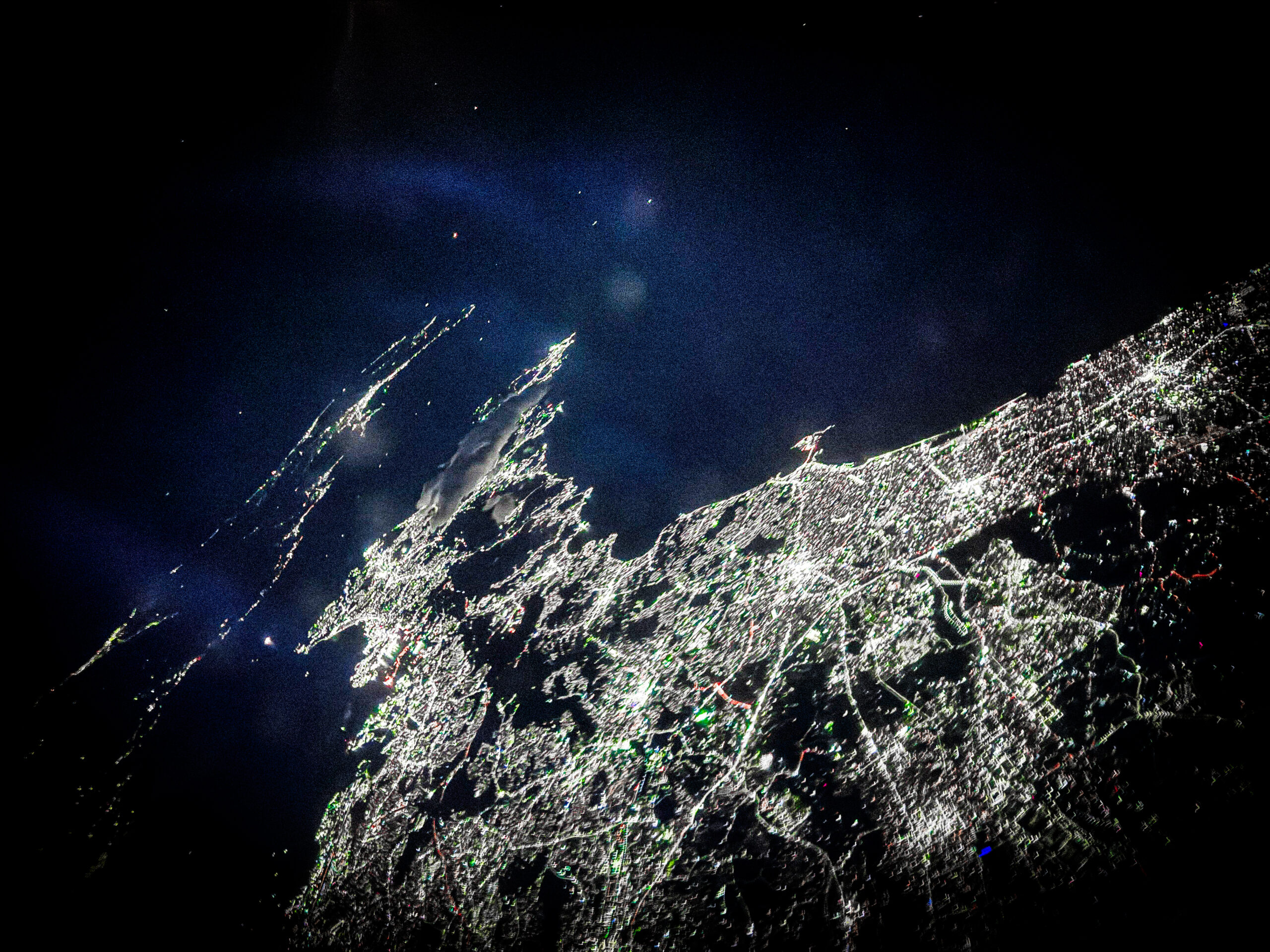
She called shortly after midnight. The call seemed to come at both the right time – Rodge having just stumbled back from the pool bar – and entirely “out of the blue,” as they say – it being lightning and blue being the sky. Months had passed since Rodge’s phone last rang. No one had the number. No government. No telephone company. And certainly, no friend of his. It was never not a “wrong” number. So you can imagine Rodge’s surprise when he heard a familiar female voice on the other line.
“Hey Rodge. I found a job for you”
“Eden?” he presumed.
“Sorry to call you so late, but it’s 9am here in Kathmandu.”
“Does that mean you’re still in the Service?”
“You could say that…. new boss is a little different though.”
Despite their distance, Eden knew Rodge was living on the down-and-out – that it had been three years since he last flew commercial. She also knew that he was not actively looking for work, content instead to live on the fringe off his veteran’s pension. Well, the rate was $15,000 cash for one 57 minute flight. The aircraft and clientele had already been arranged. She told him to go on a run in the morning and sweat out the booze. No cologne either. A uniform would be provided to when he showed up at the depot. Rodge jotted down the address and could sense the sun was now burning down on Kathmandu. Rodge could almost hear the prayer bells in the distance. She asked if he had any questions.
“Yeah Eden… why me?”
“Well, Rodge, you have been specifically requested by the client, if not by name, then by definition” she paused.
“And what definition is that?”
“The client wants a pilot who had flown in two wars but never killed. And according to our records you’re the only one.”
Considering there were about twenty planes in their service, Friday was a surprisingly quiet day at Eye of Ra Tours. Rodge’s flight would be the only flight for the day – as per the client’s request. In the afternoon sun, the hangar’s tan and weathered plastic paneling glowed like abalone and the air was thick with the dulcet esters of industrial decomposition.
The depot was a rather peculiar business tucked neatly among various turn-of-the-century warehouses on the docks of Sheepshead Bay. Rodge had certainly heard of Ra’s before. For years, it had served as a clearinghouse for pilots passing through New York City – war heroes and adventurers alike readjusting to civilian life. Eye of Ra was one of the few places a pilot could work as much or as little as they wanted. It had employed some of the most famous pilots of every generation. And it had a perfect track record. As such, the clients were almost always industrious and influential. Presidents, world leaders, CEOs and the like. The service that Eye of Ra provided was second to none. After all, Eye of Ra was the only operator of aerial tours in New York City and the waitlist was nine months long.
Upon walking into the hangar, Rodge spotted their ride basking in chrome. The Cesna 306 – Atropos – weighed 2199 pounds on the ground – unfueled. Next to Rodge’s wide shoulders and elongated geometry, the plane looked like a toy.
“These planes lose about 5 pounds a year. That Big App-mosphere is real tough on the ladies. You know, normal wearin’ and tearin’…. city clouds… vinegar rain…” the tech droned on with nervous energy, as he loaded Atropos up with 554 pounds of fuel. “Alright that gives you gents about 1350 pounds to spare. From what I hear, our client will be travelling light.”
On the other side of the propeller, Captain Rodge Pierson nodded along, “1350, check” but his mind was entirely elsewhere. Rodge had been at the hangar for over an hour and his silver SEIKO now struck 15:37pm, meaning his copilot was already seven minutes late. Around the edges of silence, Rodge could just make out Glenn Miller’s trombone whispering from some unseen, dusty AM radio like the prayer of a ghost.
“Say fella – what’s the last bird you took up?” the tech inquired, trying to make the seemingly tense Captain comfortable.
“DC-9. 95 seater.” Rodge said without a hint of emotion, crouched over and inspecting the landing gears and tires. He kicked the tire. It didn’t flinch.
“And before that?” the tech pried.
“Hercules C130,” Rodge looked him right between the eyes.
The tech had pried far enough. He had read Rodge’s file – seven trips from Vietnam to San Diego in that four prop. Not easy to do. And ten stints on the casket tour before that. Harrowing stuff. He changed the subject.
“How about that DC-9? Heard it flies like a dream. Like a dream on autopilot.” An awkward silence was no sooner realized than it was interrupted by the sound of a heavy metal door opening. Rodge saw a thin man with bold features glide across the rubberized cement, left hand outstretched. Despite the explicitness of the stranger’s youth, Rodge was impressed by the man’s sprightly nature and air of gravitas.
“Jona Arces,” the stranger projected like practiced poetry, phrased and intonated like the start of a sentence to be continued. “I believe we’ll be taking Atropos up together this evening. Don’t let the myth fool you, she really is a lovely lady.”
“Rodge Pierson,” Rodge replied, closed sentence and all.
“Ahhh yes, they told me about you. Quite peculiar circumstances if you ask me – but then again, peculiarity is our profession – and conditionality part of our condition. For what it’s worth, you look exactly as we imagined.”
A velvet glove – the words caught Rodge off guard but were delivered with such perfect nuance that no verbal response could logically follow. Gauging his soon-to-be copilot’s discomfort, Jona added “That is to say you look exactly like a man who has flown in two wars but never killed. For what’s it worth, we all think this is a good thing.”
Jona’s repeated use of “we” made Rodge immediately unsettled. Rodge had not asked a lot of questions when he signed up for the job. Sure, the whole scene was a bit eccentric to say the least, but he had not noticed anything amiss when he checked-in with the receptionist – just normal wearin’ and tearin’. But somehow, Jona’s use of we and all made Rodge very nervous. The whole scene was a bit eccentric to say the least. At least, the money was good and the plane would do. Plus Rodge had been to war. Twice.
“Did they tell you who we’d be flying today?”
The clients arrived one minute late. Upon seeing the three passengers walk in, Rodge sighed noticeably, as if his worst fears were suddenly realized: yes, he thought, this must all be some sort a progressive thought experiment. Here was proof that there was in fact a we – a brain trust organizing this strange activity – and it was that we who requested him – a killless warpilot. As the passengers made their way from the human-size door to the Cessna, Rodge matched their faces up with what Jona had just told him.
Right in front of Rodge, in saffron and maroon, with a smile of eyes equivalent to that of mouth, was no other than the 14th Dalai Lama – Tensin Gyatso. To his left – the presumed “intellectual ringleader” of the whole affair – Patvo Lugo sauntered in like a marble bust heavyset on human legs. A short and grotesque man in his early forties with wild hair curled in a congenitally unconventional way, Lugo was an inimitable intellectual force. As a former Poet Laureate, a famed TIME Magazine Correspondent, and Hollywood’s hottest new director (surrealism masquerading as progressivism), Lugo’s detailed authorial lens had no Leica counterpart. And last but not least, there was George, a homeless man the Dalai Lama had befriended at the station who smelt of barley wine and knew the New York streets better than just about anyone. There was an extra seat in the jet so George accepted their offer to join along. It was quite the menagerie. And Rodge had no idea who was paying for it all.
The Cesna 306 is a small plane by any measure. One look around the hangar and it’s obvious that the 306 was the smallest animal in Ra’s ark. The one prop six seater was not for the light of heart. Like a Cadillac De Ville with wings, the passengers were tightly circumscribed by aluminum on all sides – their faces often no more than 5 inches separated from the rushing silver atmosphere. In the 306, the passengers could see and hear in all directions except behind them. It was in these narrow confines that Jona Arces really excelled. Unlike the majority of Ra’s regulars, Jona had never fought in a war. He was too young for one and too busy for the other. Jona had a dual master’s degree from Harvard and was highly informed in all things. He had three opinions on everything: the one side, the other side, and the truth. And he could switch between them all with ease as context and conversation required. Jona was a conversationalist through-and-through and typically served as the narrator of Ra’s City Tours – while simultaneously performing copilot duties with deft confidence. Jona was drawn to the profession not by a natural love of aviation, but rather an affinity to mix and mingle with the rich and famous.
Once on the inside, the scale and intimacy of the 306 caught Rodge offguard. As the tech closed the door and latched it from the outside, Rodge felt an immediacy that reminded him of the elevator door at the Pentagon the day he had walked away from it all. But the feeling came and went without leaving an impression and Rodge maneuvered Atropos to the end of the runway and then turned the craft around so that it was facing the harbor the way a bull faces a torredor.
Rodge and Jona had agreed to pilot the 306 manually – both agreeing that autopilot onboard was prehistoric – a relic of technologies best forgotten. They had also agreed that Rodge would take her up and down – but Jona guide her around Manhattan’s slender geography. A warm summer rain recycled itself into the ocean south of them. Rodge was to keep an eye on it. They checked the gauges, illuminated the beacon, and readied the throttle. Rodge let off the brake and boosted the throttle to 1700. Within moments, the small plane was gliding over the tarmac and slicing its way diametrically into the evening breeze. Jona had never witnessed a cleaner takeoff. At 12,500 they crosschecked and Jona took the reigns – holding the grip casually with a single hand – as if out for an evening drive. Rodge took a deep breath out and repositioned his center of gravity so that his long frame was neatly tucked out of Jona’s periphery. In the back seat, the passengers had yet to say a word
The Dalai Lama had never seen New York City from above. They were to fly west over Williamsburg, then trace Manhattan’s finger at an elevation of 12,500 feet. The total route was to clock in at 97 minutes. Patvo Lugo had specifically requested that the Dalai Lama see and not be told – that the Bikhu be allowed to observe the city from his own temporal vantage point. They were not interested in the architecture or construction techniques, nor concerned with the city’s history – its short existence paling in temporal comparison to the elements. No, Lugo just wanted the Dalai Lama to see mankind’s latest creation – whether enlightenment or folly, without judgement – to experience, not understand. If any of the passengers – including George – had a question, the pilots were instructed to answer it. The client also specified that the pilots were permitted to speak to each other unburdened and without preponderance. But other than that silence was expected. The whole flight would be recorded on a cassette tape that was to be replicated and sent to Metro-Goldwyn-Meyers (MGM) and the Library of Congress.
The first five minutes of tape are largely silent other than a few remarks in the cockpit spoken in aerial vernacular. The silence belied the five men’s fascination and awe with the ability of mankind to command the skies. Jona eased her off the pitch and pointed her ballast towards the mass of Creation ahead of them. The sun had already set in the East and was now starting to set in the West. Rodge kept his eye on the warm summer rain clouds but the diminishing sunlight made them increasingly indistinguishable from the clouds of night. They were now over Manhattan and Jona was taking his usual route, only backwards. He would work his way up the FDR Drive – past the United Nations tunnel – then veer East – passing wide over Riker’s Island before traversing back towards the Bronx – and Yankee Stadium – Harlem – and work his way down the Hudson Parkway – all the way past Wall Street and the Statue of Liberty. He had never done it in reverse but could understand the rationale: Industry, Politics, Prisoners, Culture, Money and Freedom – as if to say these are the institutions that FREEDOM FEEDS.
Finally, George could bear the silence no longer. “You know, I’ve spent my whole life on these streets and never thought to ask about the name – who was Mr. Manhattan?” A common question, Jona thought. “Like many other American cities the word itself predates the meaning. There are several theories as to the origin but all agree it comes from the Lenni or “Delaware” Indians. It either means “island of many hills,” “place with wood for bows” or “place of inebriation.”
“Yes, and which is it?” Lugo asked, sarcastically hinting what they all knew.
“Well I guess all three would be accurate, I suppose”
They were now passing the Village and the grid was checkered. Vast shadows overlaid with perpendicular avenues flooded by the infamously orange sun. The mica-laden sidewalks glowed like gold and even from the air, you could tell the weekend was getting under way.
“Can you believe that I am one of those people?” George asked.
“I hear there are 7 million men and women in the city on any given day.”
“Ahhh just my luck” George proclaimed. He knew the city was always bustling – in fact it had been a while since he had seen the same face twice – but seven million was simply beyond his comprehension – it reflected a scale and perspective he had never known. Now sitting between the Bikhu and Lugo, staring at the strange beast through the cockpit window – he suddenly saw his own insignificance. If each person in the city represented an average of one person, and some people had the same power as thousands of others, he understood he must be less than one person. “Must be the reason I can never get God on the telephone.”
Lugo jumped on this line of questioning. “Well George, which God are you calling? And is he the only God in New York City?”
Rodge looked over at Jona, whose face now seemed stowed in a smiling, plastic position, and wondered if he should speak.
George replied “I worship The One.” Funny how everyone knew the One, Rodge thought. As if One God was better than Millions. Rodge had never understood the allure of monotheism. This was the narrative he was spoon fed his whole life, but does not a child identify more with the anthropomorphism of Zues and Poseidon than a shapeless, formless ONE?
“Ahhh yes, the ONE – Yahweh – the same god shared by the Three Abrahamic Faiths. It certainly is an interesting math problem.” Lugo admitted.
Rodge had done the math before. On a long flight back from Vietnam – the casket tour. With help from his encyclopedia, he mapped it all out. X believers of Religion Y with Z amount Gods. He had found that the God variance was extreme. The numbers didn’t lie.
“73 humans per God on average” Rodge said. Jona shot him a glance. “I’ve done the math.”
And just like that, Lugo came alive. In his newfound excitement, a faux-European accent rose to the surface like some strange excavated city. He pressed the recorder to the cockpit – “Can you say that again sir? Not just the words, but also their meaning.”
“73 humans per God on average. 3 billion humans on earth. 41 million Gods.”
“Out-RAGEOUS!” Lugo shouted.
“That’s why I converted to Shintoism after the war. Eight million Gods for the 100 million of us. It was either that or Hinduism – 33 million for the one billion. So I chose the Shinto and now share a god with twelve.”
“And I suppose I share a God with 1 billion people” George muttered.
“And I suppose I share no God with anyone” Lugo could simply not contain himself. “Average number of Gods – OUT-rageous! – and you mean to tell me that there are 41 million Gods in NYC?”
By this point, Jona’s plastic tray table of a face had started to warp. Rodge could sense in the wrinkles that Jona had underestimated him – thought him some jaded kill-less two-warrer, content with suffering idly in the bedding of his discontent. And Eden – take this money and sweat out the booze. People always treated veterans like the war ended. But Rodge knew that the war never ends. It goes from the physical to the emotional – and if you make it far enough – to the spiritual. And the war wages on and on in the bodies and minds of men around the world. Yes, Rodge could tell Jona was losing his smooth veneer – and even sensed a hint of intellectual jealousy in his scowl. Rodge let the pride float right by him – and slowly backed off.
“Yes, in theory – although I do not profess to know where Gods ‘reside’” He was not going to leave his copilot hanging.
“AND HOW MANY MILLIONS DO THESE GODS HAVE?” Lugo asked – pointing down at the Wall Street promenade below them – clusters of androgenyous grey and glass buildings with windows that saw out but never looked in. “Reminds me of an old poem:
The hawk makes his nest
in plain view – unlike the others.
Rodge waited for the rest but it didn’t come – that was the poem. He loved it for reasons he could not articulate.
As they passed the Statue of Liberty, Lugo inquired of Jona – “how much does freedom weigh?”
“Sixty two thousand pounds of copper and 250 thousand pounds of framing and 54 million pounds of cement.”
“So less than the 7.5 million tons of munitions dropped on Vietnam?” The words made Rodge shudder. “Freedom weighs less than bombs – I think that makes some sense. Old Freedom weighs less than New Bombs – I think that makes more sense. But without Freedom, you would not have the city we witnessed tonight – no way no how.”
The excitement in the craft was palpable. Jona’s gambit to reverse the order of the tour and build up to freedom – combined with the preposterousness and increasing elevation of conversation had filled every cubic inch of Atropos with wonder. Rodge was still reclined when Jona smiled at him and gave a small salute.
“Crosscheck. Twelve miles. SSW. Fuel Tank 30%.”
Rodge re-engaged his grip sticks. Night had firmly gripped Brooklyn and dark, amorphous clouds seemed to hover over the land mass like lost sheep penned in by a fence of river. Somewhere between Wall Street and Freedom, Rodge had taken his eye off the storm to the south. Whether it was the presence of holiness – the fact his mind was turned on for the first time in a while – or simply his years of muscle memory culled from one-way flights, where a jet plane can always outrun a storm, Rodge had not spotted the lightning – and now the five of them saw it all together for the first time – not more than two miles away from them. Lugo had found his voice and was now free-versing poetry into the recorder:
I like rain more than anyone I know –
except small bird eating worm –
vulture on industrial lamppost –
witch waiting for reincarnation –
And with stanza, the rain started thrashing against the plane – assaulting every aluminum surface all at once. The plane dropped and rocked as the propellers chopped the rain into a billion little pieces and then a billion more. Neither pilot was a stranger to atmospheric hostility, but the lightness of the plane – and the brevity of the runway – gave them an incredibly narrow margin of error. Billions of raindrops became trillions – as the chrome propellers pulverized the rain back into cloud vapor. The Dalai Lama looked out and saw a visage as older than man. Lightening – striking the entire Earth an average 100 times every second. Each strike, enough electricity to power 56 AMERICAN houses for a day. Power, of which no amount will ever be enough. A mile from the Brooklyn coast, Rodge finally turned Atropos into the cloud corral. The radar proclaimed the plan no more than 2,500 feet off the ground, but not a single sign of life was to be seen above or below them. They were in the Ether – they could have been anywhere in this life or the next.
“Thank God for Autopilot” Lugo proclaimed, himself a fierce technodeterminist. “Yes, that is what I’ll name the movie – ‘Thank God for Autopilot,’” he laughed. “Out-Rageous.”
Jona and Rodge looked at each other nervously but neither spoke. Fifteen hundred feet and dropping. One thousand and still no floor. Rodge had calculated the descent before they had lifted off. He was going to drop her the final one thousand feet at an angle of -23 degreees for the final minute and a half. He directed the plane to the “drop spot,” set his stopwatch and let her slice.
On the way to Earth, there are two downs: the descent and the dive. One of them gets you to land safely, while the other instills fear in the hearts of man and Gods alike. Jona cleared his throat and spoke up for the first time in what seemed like an hour – “Lugo, there is no autopilot.”
The plane descented, dived, climbed, and descented.
“Just as well,” Lugo responded like a true existentialist. “Well you lads do whatever you deem fit. Land her if you want, crash her if you prefer, just whatever you decide, please get us out of these cloud – if there is one thing I can’t stand it is a short depth of field.”
It was then that Rodge realized they would be alright. No matter whether the ground was 1,000 feet below them or six feet above them. He had flipped a switch. He greeted Kuraokami – the Shinto dragon spirit of rain – and Susanoo – the Deity of All Storms. Not a Western prayer, but an Eastern acknowledgement. He was not asking for “safe delivery” – there was no begging or pleading – no “do this for me.” Rodge simply said “hello old friends.” Somewhere in the background Jona was speaking to him – and Lugo was speaking to Jona – each treating the other like an American God – pleading – demanding attention. But Rodge was lost in meditation. He was counting down from thirty, hands perfectly still, breaths deep and full.
Rodge didn’t even notice when the city floor reappeared at 100 feet – sure, he had heard Jona shout orders – Lugo scream – George pray – and the Bikhu nothing fervently. And when they kissed the tarmac five seconds later – at the right time and the right place – he could smell the sweat and hear the adrenaline. But he remained quiet. He was greeting the Sukuna bikona – the “small lord of renown.” He wheeled Atropos into the warehouse. The tech – rain drenched – ran over, drenched in rain and with a previously unseen sense of urgency. As they disembarked the plane, each man carried a different weight on there face. Lugo bolted out of the plane in a state of absolute exhilaration. He had taken his existentialist nihlism to the absolute limit and “passed the test” – he now knew no need for prayer. Conversely, George came out calm and collected – for despite being one of seven million – or less than one – his God had finally listened to him. Jona exited with shock and horror – resigned to take a break from aviation to focus on his true lifelong goal of writing non-fiction on myriad of topics. The Dalai Lama flowed out, moving quietly and without preponderance. And Rodge, stayed in the plane for a moment longer and discreetly reached over to the central console and turned the three switches off. One for the lights, one for the engine, and the third for autopilot. Yes, autopilot had been on the whole landing. He then proceeded to exit the plane last.
He heard Glen Miller’s trombone sing from the AM radio across the hangar. Glen Miller – the king of big band – disappeared one war-torn night over the English channel. Lost in the fog.
As the Dalai Lama walked away, Rodge could have sworn he heard the Bikhu say “now there is a man who can play.”